Answering the common buyer question, these practice golf balls are designed for backyard use, indoor spaces, or small yards. They prioritize safety, visibility, and forgiving flight to help golfers improve without damaging property or limbs. The top picks below are suited for different players: beginners who want soft impact, families practicing together, and hobbyists seeking longer practice sessions without noise or risk. A quick summary table follows to compare core traits at a glance.
| Product | Best For | Material | Flight/Distance |
|---|---|---|---|
| Guirnd 20 Pack Foam Golf Balls | Beginners and kids | Soft polyurethane foam | Limited flight with realistic feel |
| Full Choice Practice Golf Balls (20 Pack) | Urban practice and backyards | High-quality EVA plastic | Controlled flight, quiet |
| Joyberg Practice Golf Balls 24 Pack | Colorful visibility, indoor/outdoor drills | Plastic (polyurethane) | Limited flight, consistent spin |
| Guirnd 20 Pack Practice Golf Balls (Foam) | Beginner-friendly, upbeat practice | Soft polyurethane foam | Soft feel with stable spin |
| HHLZM 24 Pack Foam Golf Practice Balls | Portable practice on the go | PU foam | Realistic feel with limited flight |
Guirnd 20 Pack Foam Golf Balls

Best for beginners who want a soft, impact-absorbent practice option with high visibility. These 41mm foam balls weigh about 7.8g and come in five colors (yellow, white, orange, blue, red). The surface features a realistic dimpled texture to mimic flight and spin, helping players gauge distance more accurately. The foam construction reduces risk to furniture and pets during indoor or backyard practice. Caution: foam balls can wear faster with aggressive swings and may dent if struck with excessive force against hard surfaces.
Full Choice Practice Golf Balls (20 Pack)

Best for compact spaces and noise-conscious environments. Made from premium EVA material, these practice balls balance soft feel with durability, resisting cracking and deformation in varying weather. Aerodynamic design provides controlled flight, making them suitable for backyards and garages. They are quieter than traditional golf balls, helping to minimize disturbances. Limitation: the flight is intentionally limited, so they prioritize safety and space over long-distance practice.
Joyberg Practice Golf Balls 24 Pack

Best for color-coded visibility and beginner training. These 42mm plastic golf balls feature multiple bright colors to easily track trajectory across lawns or indoors. Each ball has 26 symmetric holes to promote consistent spin and predictable flight. They are lightweight and designed for limited-flight practice, making them suitable for kids or new golfers who want quick feedback without chasing errant shots. Caution: plastic construction can be less durable under heavy impacts compared with foam in some scenarios.
Guirnd 20 Pack Practice Golf Balls (Foam)

Choose this if you want a foam option with a realistic feel and easy water-friendly setup. These 41mm, about 7.8g balls feature bright yellow colors for enhanced visibility in yards or parks. The dimpled texture supports consistent spin, aiding distance judgment. They are suited for beginners or those seeking safe back-and-forth practice at home. Limitation: foam wear can accumulate with frequent, forceful hitting, reducing lifespan in high-use scenarios.
HHLZM 24 Pack Foam Golf Practice Balls
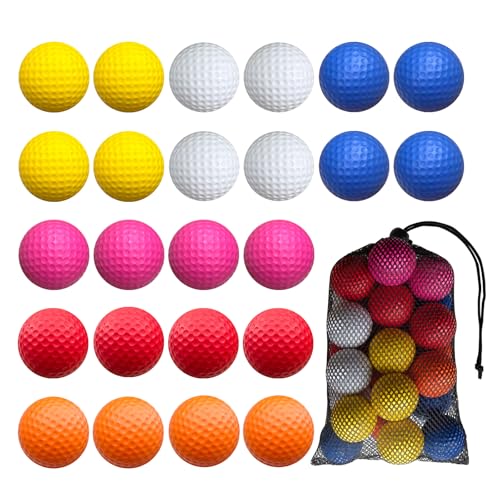
Best for portable practice on the go. These 42mm foam balls weigh about 0.3 ounces and come in a mixed color set. The surface features a realistic pit texture to sustain rotation and simulate flight. The mesh bag included aids transport and storage, making them convenient for travel or quick backyard sessions. Caution: as with other foam sets, they may lose loft or spin characteristics after heavy use over time.
Junkin 80 Pcs Foam Golf Balls

Best value option for bulk practice with families or groups. The 80-piece package includes soft, elastic foam balls that resist denting and breakage, suitable for indoor or outdoor use. They’re lightweight, reducing risk to furniture and pets, and the 1.65 inch diameter aligns with standard mini practice setups. Limitation: the high quantity may be excessive for solo practice and requires adequate storage space.
Buying Guide
What material should you choose? Foam provides the softest feel and lowest risk of damage, making it ideal for beginners and indoor use. EVA and plastic options offer better durability and more controllable flight, which can be preferable for longer practice sessions or outdoor spaces.
How important is flight control? If you practice in a small yard or garage, look for balls with limited flight and a design that emphasizes predictable trajectories. This helps prevent shots from going beyond your practice area.
What about visibility and color? Bright colors improve tracking against grass, snow, or indoor floors. Multicolor sets reduce the chance of losing a ball in tall grass or cluttered spaces.
Durability versus lifespan. Foam balls tend to wear with repeated hitting. If you expect heavy use, consider a tougher EVA-plastic blend or a more durable foam with a reinforced surface.
Storage and portability. Many sets include storage bags or mesh pouches. If you travel to practice locations, a compact solution helps keep balls organized and accessible.
Frequently Asked Questions
- Are these balls safe for indoor use? Yes. Most foam and lightweight plastic practice balls are designed for indoor use and are gentle on furniture and walls.
- Which material is best for beginners? Soft foam is typically preferred for beginners due to its forgiving impact and lower risk of injury or damage.
- Can I use these balls outdoors in windy conditions? Limited-flight designs help maintain predictable performance, but wind can still affect trajectory more than in a controlled area.
- Do the balls come in different colors? Many sets offer multiple color options to enhance visibility and tracking during practice.
- How many balls should I start with? A basic starter kit of 20–40 balls is sufficient for most backyard practice sessions; larger bulk packs are better for group practice or long-term use.
- Will these affect my real golf swing? They are designed to mimic feel and spin without requiring a full course setup, making them suitable adjuncts to regular training.