When searching for no-spin golf balls, the goal is to reduce side spin off the tee and improve stability through the bag. The top picks below are best for different players, from beginners seeking forgiveness to mid-handicap golfers chasing straighter drives and better consistency. Each product highlights core design choices like dimple patterns, urethane or Surlyn covers, and compression that influence spin, feel, and distance. Use the quick comparison table to identify which ball aligns with your swing and goals.
| Product | Main Benefit | Best For |
|---|---|---|
| P*ss Missile Distance Golf Balls | Lower spin, better trajectory | Long, straight drives; players chasing distance |
| Bridgestone e12 Golf Balls | Improved distance; reduced hooks/slices | Players needing more forgiveness and consistent flight |
| Vice Pro Zero Golf Balls | Minimal ball deviation in wind | Control-focused players who want stability off the tee |
| TaylorMade Distance+ Golf Balls | Dependable distance with soft feel | All-around players seeking reliable performance |
| Maxfli StraightFli Golf Balls | Low spin for straighter shots; durable | Beginners and recreational golfers focusing on straightness |
P*ss Missile Distance Golf Balls – 4-Piece Design
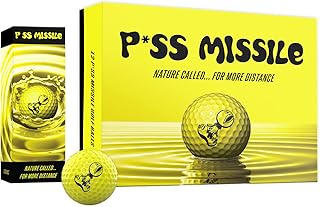
The P*ss Missile Distance Golf Balls feature a 4-piece design with a Surlyn cover and a high compression core. The key selling point is lower spin for straighter trajectories and longer carry. This makes it a solid choice for players who struggle with hooks or slices and want a predictable flight. Best for golfers prioritizing distance and a more forgiving, straighter ball flight.
Best for: Players seeking maximum straightness and distance on off-center hits. Consider this if you want a ball engineered to minimize dramatic curve on mis-hits.
Caution: As a 4-piece construction with higher compression, very slow swing speeds may feel firmer and require a more deliberate swing to optimize performance.
Bridgestone e12 Golf Balls

The Bridgestone e12 balls emphasize an Optimal Flight System to maximize distance while reducing hooks and slices. They also deliver increased forgiveness thanks to a contact force dimple design that lowers side spin. This selection is well-suited for mid- to high-handicap players who want consistent, forgiving performance on mis-hits and a stable rollout off the tee.
Best for: Players who want improved distance with fewer hooks or slices and additional forgiveness on off-center hits.
Caution: Some players with a faster swing may notice a bit less feel around the greens compared with softer urethane options.
Vice Pro Zero Golf Balls

Vice Pro Zero balls use a 3-piece fused urethane construction with a new 344-dimple pattern that aims for medium-high ball flight and minimal deviation—especially useful in windy conditions. The combination offers strong distance off the tee with stability through the wind, making it a good choice for players who value precision and consistent flight even when adapting to weather.
Best for: Players who play in breezy conditions and want a minimal deviation flight with solid distance.
Caution: Urethane-covered balls can feel firmer on short-game shots for players who prefer a very soft feel around the greens.
TaylorMade Distance+ Golf Balls

TaylorMade Distance+ balls are designed for dependable distance with a soft feel. The core-and-cover combination prioritizes faster ball speed and consistent flight, making them well-suited for players who want simple, repeatable performance without sacrificing control around greens. This ball tends to be a reliable all-around option for a wide range of swings.
Best for: All-around players who want reliable distance with a comfortable feel on approach and short game.
Caution: They may not deliver the same spin contrast as higher-performance urethane balls on approach shots for players seeking ultimate spin control.
Maxfli StraightFli Golf Balls – Matte Orange

Maxfli StraightFli balls feature a matte orange finish and an advanced dimple pattern designed to minimize side spin off the tee, promoting straighter shots. A low compression core helps speed up ball velocity for longer carry, while the ionomer cover adds durability. This ball is a strong pick for beginners and recreational golfers who want a straightforward, straight-flight ball with a soft feel on irons and short game.
Best for: Beginners and recreational players targeting straighter starts and reliable distance with a soft feel.
Caution: Matte finishes can be more sensitive to marking; on bright greens, the color may show wear over time, affecting visibility for some players.
Buying Guide: Key Considerations For No-Spin Golf Balls
- Spin reduction vs. feel: Lower spin off the tee often comes with a firmer feel. Consider your preference for feedback on contact and short game.
- Cover material: Surlyn covers prioritize durability and distance, while urethane covers tend to offer better greenside feel and control at a premium cost.
- Core design and compression: Higher compression cores can promote spin reduction but may feel firmer; lower compression can feel softer and may generate more immediate ball speed with certain swings.
- Dimple pattern: Patterns influence stability, wind tolerance, and side-spin tendencies. More interconnected patterns generally improve accuracy in gusty conditions.
- Player level and swing speed: Beginners and high handicappers often benefit from forgiving, low-spin options; experienced players may trade some forgiveness for feel and spin control around greens.
- Wind and course conditions: In windy environments, a ball with minimal side spin is advantageous for maintaining direction and consistency.
FAQ
What is a no-spin golf ball?
A no-spin golf ball is designed to minimize spin, especially sidespin, off the driver and irons. The goal is straighter trajectories and more predictable flights, particularly for players who struggle with hooks or slices.
Who should use low-spin or no-spin balls?
Beginners, high-handicap players, and recreational golfers who want more forgiveness and consistent direction. Moderate swing speeds can also benefit from certain low-spin designs that promote speed and carry without excessive curvature.
Do no-spin balls feel softer or harder?
Feel varies by cover and core. Surlyn-covered options tend to be firmer and more durable, while urethane-covered balls often feel softer around greens but may be pricier.
Are no-spin balls good for windy courses?
Yes. Lower side spin improves stability in wind, helping you keep a straight flight path even when gusts affect your trajectory.
Should I switch to a no-spin ball if I’m a beginner?
Consider a forgiving no-spin or low-spin ball to reduce directional miss and boost confidence. Test different options to match feel and distance with your swing.
How do I choose between Surlyn and urethane?
Surlyn is durable and distance-focused; urethane offers better spin control and feel around greens. Choose based on your priorities: durability and distance vs. greenside control.