For golfers seeking maximum forgiveness in a putter, these models prioritize alignment, stability, and predictable roll to help minimize errors on the green. The top picks here are suited for players who want confidence on long greens, improve distance control, and reduce mis-hits. This guide compares five highly forgiving options, highlighting who benefits most from each design and where to choose one over another.
Summary of selected products
| Product | Best For | Key Benefit |
|---|---|---|
| Cleveland HB Soft 2 Putter | Straight to slight arc st users | Speed-optimized face for consistent distance |
| TaylorMade Spider #3 | High-MOI mallet fans | Multi-material build for stability and roll |
| TaylorMade Spider ZT Putter | Toe-ward players | Low torque, unique sole for repeatability |
| PGM Putter (Blade) | Beginners to intermediate | Notched grooves for precise roll |
| Cobra Classic Putter | Classic feel seekers | Stable face and confident alignment |
Cleveland HB Soft 2 Putter Model 11

The HB Soft 2 Putter prioritizes a consistent feel and distance control. Features include Speed Optimized Face Technology, which uses a dynamic groove pattern to normalize ball speed across a larger striking area. This makes it a strong choice for players who want predictable distance with a straight or slight arc stroke. The model emphasizes a consistent swing feel across shaft lengths, with an additional 20g weight inside the shaft butt on models 35 inches and longer. Best for players who want straight-line accuracy with a smooth feel.
Best for: Players seeking a forgiving, fast-reacting face that smooths inconsistent distances, especially on longer greens.
Limitations: The neck and hosel options may constrain very short-arms players who prefer a compact setup.
TaylorMade Spider #3
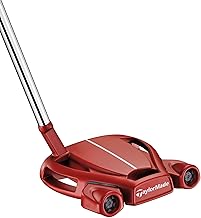
The Spider #3 uses a multi-material build to enhance MOI, stability, and roll. Its Pure Roll insert is designed to increase topspin and improve forward roll for distance control, backed by a design that promotes a square face at impact. This model suits players who want a stable, high-MOI mallet with a modern feel and reliable alignment. It balances comfort with performance for a forgiving stroke on mid- to longer-length greens.
Best for: Players who value high stability and a consistent roll with modern mallet construction.
Limitations: Some golfers may prefer a more traditional feel over the current-gen insert technology.
TaylorMade Spider ZT Putter

The Spider ZT Putter emphasizes low torque and precise alignment through a toe-ward orientation and a tailored hosel layout. Its sole design accommodates various eye and ball positions, helping players achieve a repeatable stroke from setup to impact. The cobra-like stabilization and a design philosophy aimed at keeping the face square through the stroke make this model a strong choice for players who struggle with face control or path inconsistencies.
Best for: Golfers who want a stable, toe-up feel with adaptable alignment features for different putting styles.
Limitations: May feel heavier to players used to more compact putters or those who favor a upright stance for sightlines.
PGM Golf Putter — Blade

This blade-style PGM putter features notched grooves designed to enhance precision and stabilize the ball on impact. It is paired with a balanced 34-inch shaft and a combined weight that suits a wide range of players from beginner to intermediate. The design emphasizes high forgiveness and a predictable roll, making it a straightforward option for those who want a traditional look with modern groove engineering.
Best for: Beginners and intermediates seeking a simple, forgiving setup with precise groove notches for stable rolling.
Limitations: Blade shapes may not be preferred by players who favor mallet-style alignment aids for extra visual cues.
Cobra Classic Putter

The Cobra Classic Putter combines a CNC-machined face with a traditional steel shaft for consistency and control. It features tour-inspired alignment and a proven feel. The classic setup is designed to deliver a steady, confident stroke, with a refined topline and a simple sightline to enhance alignment. Best for players who prefer a traditional look and dependable feedback on the greens.
Best for: Players who want a timeless look with reliable stability and a clean impact sound.
Limitations: Might lack some of the newer high-MOI advantages found in modern mallets for extreme forgiveness.
Buying Guide: Key Purchase Considerations
- Forgiveness vs. feel: Higher MOI designs reduce twist on off-center hits, while blade putters prioritize feedback. Choose based on your preference for feel vs. stability.
- Face technology: Look for groove patterns and inserts that promote a consistent roll. Notched grooves and Pure Roll inserts can influence distance control.
- Alignment aids: Strong alignment lines, topline design, and sightlines help target the hole. Mallets typically offer more visual cues than blades.
- Weight distribution: Mallets and multi-material heads often provide higher MOI, which can improve consistency, especially under pressure.
- Length and fit: 34-35 inch lengths suit most players; ensure your grip and stance allow comfortable setup without crouching or overextending.
- Grip and shaft: Consider grip texture and material, plus whether the shaft length aligns with your preferred posture and stroke type.
Choosing By Stroke Type
- Straight-stroke golfers: Look for putters with stable alignment systems and higher MOI for a straight path through impact.
- Slight-arc players: Models with slight toe flow and hosel configurations can help keep the face square to the path during the stroke.
- Face-balanced designs: Often provide the most forgiveness for minor stroke deviations, particularly on longer greens.
Common Scenarios and Recommendations
- Best overall forgiving option: TaylorMade Spider #3 for high MOI and reliable roll.
- Best for traditionalists with modern features: Cobra Classic Putter offers a classic look with stable performance.
- Best value for beginners: PGM Blade with notched grooves for consistent rolls and forgiving weight balance.
FAQ
- What makes a putter forgiving?
- Are mallet putters more forgiving than blades?
- How important is face insert technology?
- What length should I choose?
- Should I prioritize alignment aids?
- Is a traditional blade or modern mallet better for beginners?
Forgiving putters resist twisting on mis-hits and promote a consistent roll and line at impact.
Generally yes, due to higher MOI, but preference for feel and alignment varies by golfer.
Inserts can influence roll and distance control; select one that matches your speed and greens.
Most players perform well with 34-35 inch putters; adjust to fit your posture and setup comfort.
Yes, alignment features help many players establish a repeatable setup and stroke.
Beginners often benefit from higher forgiveness in mallets, but blades can offer better feedback for learning touch.