Answering the question directly: high-definition golf simulator screens deliver clearer ball tracking, sharper projected images, and quieter training sessions. This guide highlights five top options that balance HD visuals with durability for home bays, garages, and small facilities. Best for serious improvement at home are triple-layer impact screens and projection-ready nets that minimize noise and maximize durability. This overview helps buyers choose by enclosure size, installation needs, and how each screen dampens sound and handles thousands of ball impacts.
| Product | Best For | Key Strength |
|---|---|---|
| Durbles Golf Simulator Impact Screen (HD Triple Layer) | Home practice and small facilities | HD outer layer with triple-layer durability |
| Tellegloww Golf Simulator Impact Screen | Indoor and outdoor setups | Sturdy, weather-ready with easy hanging |
| GOLF PAPI Mobile Simulator Net | Compact spaces and flexible setups | Full cage with integrated impact screen |
| KIKILIVE Golf Net With Impact Screen | Backyard and quick setups | Large, durable frame with high-density screen |
| River Hill Golf 10x8FT Cage With Screen | Indoor garages and outdoor use | Oversized cage for full swings and protection |
Durbles Premium Triple Layer Impact Screen

The Durbles screen uses a triple-layer design: a high-definition outer layer, a middle ultra sound-damping layer, and an impact-resistant inner layer. This combination aims to provide crisp HD visuals while reducing vibration and noise during practice. It’s best for homeowners who want a durable, projection-ready screen that can endure thousands of ball hits in enclosed spaces. A potential limitation is that installation may require a learning curve for first-time users who are balancing enclosure setup with projector alignment. The screen’s durability and quiet operation make it a strong pick for home studios or boutique training rooms.
River Hill Golf 10×8 Ft Enclosure With Screen

This 10×8-foot cage gives a roomy hitting area with a full-protection net and a projection-ready screen. It’s suited for players who want a larger enclosure for full swings and easier movement around the hitting zone. The outer cage design enhances safety for both indoor garages and outdoor spaces, making it versatile for year-round use. A caveat is that the setup may require more space and careful anchoring to ensure stability in outdoor conditions.
GOLF PAPI Mobile Golf Simulator Net

The GOLF PAPI system offers a full cage design around a compact footprint, designed for indoor and outdoor use. It supports simulator play with an integrated impact screen and staked protection for mis-hits. Best for buyers who need a portable, stable setup that fits into tight spaces and can be moved as needed. A limitation is that it assumes you’re pairing the cage with a separate projector or launch monitor, which is not included.
KIKILIVE Golf Net With Simulator Impact Screen

This net combines a heavy-duty steel frame with a five-layer high-density polyester screen, designed to withstand repeated high-speed ball impacts. It’s best for backyards or garages where space is moderate and the user wants a durable, all-in-one practice setup with clear projection compatibility. A limitation is that it requires a projector not included in the package, so you’ll need a compatible setup to realize HD visuals.
Tellegloww 9.8×6.6 Ft Projection Screen
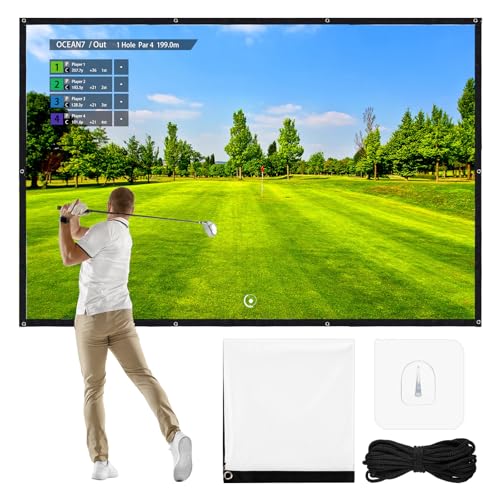
Tellegloww offers a large 9.8 by 6.6-foot screen with high-definition projection suitability and an included hanging kit. It is designed for indoor and outdoor training, providing strong HD visuals for swing analysis. It’s best for players who want a broad projection surface without custom enclosure requirements. A potential drawback is that the package notes the screen does not include a golf hitting net, which means buyers must pair it with other equipment.
Buying Guide
- Screen durability vs. enclosure size: Larger cages need sturdier frames and thicker screens to withstand full swings.
- HD visuals and projector compatibility: Look for triple-layer or HD outer layers paired with screens designed for projection to ensure crisp line-drawing of swing paths.
- Sound dampening: Middle layers that reduce vibration improve practice comfort, especially in shared spaces.
- Versatility: Some screens support indoor and outdoor use, while others are optimized for fixed in-home practice bays.
- Installation considerations: Check for mounting options, hanging hardware, and whether a projector or launch monitor is included or required.
- Space requirements: Measure your room or garage to ensure the enclosure, cage, and screen fit with clearance for full swings.
FAQ
- What is the benefit of a triple-layer screen?
It provides durability, improved impact resistance, and better sound dampening for quieter practice. - Do these screens require a projector?
Many are projection-ready, but you typically need a separate projector and often a launch monitor for full simulator use. - Is a larger enclosure always better?
Not necessarily; it should match your swing radius and space to ensure safety and optimal tracking. - Can I use outdoor spaces with these screens?
Some models are designed for indoor/outdoor use, but check weather resistance and frame stability for outdoor setups. - Do these screens come with installation support?
Some listings offer assembly help or instructions; contact seller support if you need guidance. - Which screen is best for quiet practice?
Screens with a dedicated sound-damping middle layer are preferable for reducing echo and vibration.