Answering the need for simple, portable ways to fix swing faults, this guide highlights top golf triangle training aids. These tools help keep arms and body aligned, reduce chicken wing issues, and promote smooth weight transfer. They’re best suited for beginners learning proper mechanics, intermediate players seeking consistency, and golfers recovering from swing flaws. The quick-reference table below compares five strong options.
| Product | Best For | Key Benefit |
|---|---|---|
| IJEKER Golf Swing Training Aids | All skill levels; posture improvement | Keeps arms together to prevent chicken wing |
| Callaway Swing-Easy Golf Swing Trainer Aid | One-piece takeaway; versatile for left/right-handed | Promotes synchronized swing path |
| THEMARS Golf Swing Trainer | Fixing wing, weight shift control | Soft PU ball with adjustable lanyard for multiple swings |
| Xvolt Golf Training Aid Ball | All levels; posture and alignment | Encourages consistent arm spacing |
| TrueBirdie Golf Swing Training Aid | Practice range and on-course transfer | Keeps arms synchronized for repeatable swings |
IJEKER Golf Triangle Training Aid

This inflatable triangle teaches proper posture by keeping arms together and in sync. It helps build muscle memory through the entire swing and is suitable for men, women, and even kids. It’s best for beginners to establish a connected swing and for players rehabbing swing faults.
Best for: Beginners and players working on arm-body connection. Why chosen: It directly addresses the common chicken wing issue and reinforces a synchronized takeaway.
Caution: As an inflatable aid, surface setup matters; ensure stable placement on a flat mat to avoid movement during practice.
Callaway Swing-Easy Golf Swing Trainer Aid, Orange

This trainer reinforces a key swing fundamental: a one-piece takeaway with arms and body staying in sync. It’s versatile for both right- and left-handed golfers and fits various sizes, making it a strong choice for players who want a reliable, repeatable swing path.
Best for: Players seeking a straightforward, one-piece takeaway trainer. Why chosen: Its design supports consistent sequencing of arms and torso core movements across different swing types.
Caution: Might feel bulky for very short or compact practice setups; ensure adequate space for full swings.
Campolesis Connector Golf Swing Trainer

Designed for posture correction and arm alignment, this connector helps players extend and synchronize upper body movement during full swings, chipping, and warm-ups. It aims to improve swing path, body control, and consistency by reinforcing a connected motion.
Best for: Players who want targeted postural guidance and repeatable swing patterns. Why chosen: It emphasizes a cohesive connection between arms and torso, which is central to stable contact.
Caution: It requires diligent practice to integrate into full-swing routines without disrupting tempo.
THEMARS Golf Swing Trainer
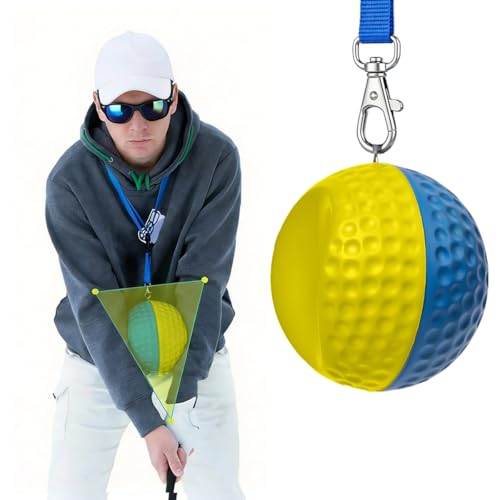
This ball-based trainer uses a soft PU foam forearm connection ball with an adjustable lanyard to fix chicken wing, slicing, and scooping motions. It improves elbow-wrist triangle form while allowing practice across putting, chipping, and full swings.
Best for: Players who want a multi-use training ball to address swing faults across multiple shot types. Why chosen: It provides tactile feedback through its ergonomic design and helps reinforce correct weight transfer and forearm alignment.
Caution: The ball’s softness works best with controlled practice; excessive power on full swings may require a larger practice area.
Xvolt Golf Training Aid Ball

The Xvolt ball trains proper swing mechanics by maintaining consistent spacing between the arms and guiding body alignment. It supports improved swing plane control and rhythm for putting, chipping, and full swings. It is designed for broad usability across skill levels.
Best for: All-round practice with emphasis on posture and arm connection. Why chosen: Its broad applicability makes it a versatile tool for players seeking long-term consistency.
Caution: Some users may require a longer acclimation period to integrate feedback into live ball striking.
TrueBirdie Swing Training Aid

This arm-band trainer helps prevent the chicken wing by keeping arms close and synchronized during the full swing. It’s designed for easy transport to the driving range and easy repetition, translating to on-course benefits through consistent practice.
Best for: Range practice and golfers seeking a portable, muscle-memory-building aid. Why chosen: Its focus on arm-synchronization supports reliable swing tempo and contact.
Caution: External grip and forearm positioning must be maintained; relying solely on this tool without full swing drills may limit transfer to full shots.
Buying Guide: Key Purchase Considerations
- Purpose and goals: Choose based on whether you need posture correction, arm alignment, or a full-swing feedback device.
- Portability: For on-the-go practice, select compact, lightweight options. Bigger aids may suit home ranges better.
- Feedback type: Visual (color coding, markings) or tactile (ball, lanyard) feedback helps reinforce correct mechanics.
- Compatibility: Some tools work better for beginners; others support consistent practice for players at intermediate levels.
- Durability: Soft materials are comfortable, but check for lasting construction if you practice frequently.
- Space requirements: Full-swing aids need room for safe practice; smaller aids fit indoor spaces more easily.
Frequently Asked Questions
- What is the main benefit of a triangle training aid?
Answer: It helps maintain arm alignment and a connected motion, reducing chicken wing and promoting a smoother swing path. - Who should use these aids?
Answer: Beginner and intermediate golfers seeking to build muscle memory, correct posture, and more consistent contact. - Can I use these aids for all types of shots?
Answer: Many aids support practice across putting, chipping, and full swings, but use as directed by the product to avoid hindered form. - Do these tools replace a coach?
Answer: They are practice aids that complement coaching by providing immediate feedback and repeated drills. - Are inflatable triangle aids durable for regular use?
Answer: They are designed for repeated practice, but ensure stable placement to prevent movement during swings. - Which aid is best for travel?
Answer: Portable options like inflatable or arm-band trainers are typically easiest to carry to the range.