Clear answers for buyers seeking reliable golf swing training tools. This guide highlights five well-rounded options suitable for beginners and experienced players alike, focusing on grip accuracy, swing path feedback, and tempo development. Each product section explains who it’s best for and why it stands out, with practical cautions to consider before purchasing. A concise Buying Guide follows, plus a short FAQ to address common questions about swing trainers and practice aids.
| Product | Best For | Key Benefit |
|---|---|---|
| FODESAN Retractable Golf Swing Trainer | Beginners to advanced | Instant click feedback and portable training |
| Swing Jacket Golf Training Aid | Coached swing patterns | Physically guides through each swing |
| GreenHaven Wrist Hinge | Arm-swing alignment | Prevents chicken wing and improves back swing |
| Quewpk Retractable Swing Trainer | Right-handed players on the go | Click feedback with ultra-lightweight design |
| TrueBirdie Swing Training Arm Band | Consistency in range practice | Keeps arms together for synced motion |
The following sections profile five top products, with practical notes on suitability, limitations, and how each tool can fit into a regular practice routine.
FODESAN Retractable Golf Swing Trainer

The FODESAN trainer delivers instant feedback via a retractable shaft that clicks when swing mechanics are correct, aiding rhythm, balance, and swing consistency. It’s ideal for indoor or outdoor practice and suits golfers seeking immediate, tangible cues to refine their technique. The ergonomic grip trainer supports proper hand placement for a repeatable grip, which helps improve accuracy over time. This tool is lightweight (0.7 lbs) and collapses to a compact length, making it a strong choice for players who travel or practice at home or on the range.
Best for: Beginners who want quick, audible feedback; intermediate players seeking grip reinforcement; travelers needing lightweight gear. Caution: While it provides feedback for rhythm and grip, it does not replace full-club practice with a real ball in every session.
Swing Jacket Golf Training Aid

The Swing Jacket is designed to physically guide you through each swing, helping you feel proper positions and sequences. It’s accompanied by comprehensive training videos that aim to make improvements observable regardless of age, strength, or flexibility. This option is well-suited for players who prefer structured feedback and a sense of “feel” through the swing rather than solely relying on timing cues.
Best for: Players who want a guided, hands-on approach; those who benefit from visual and video-backed training. Caution: It relies on proper setup and consistent use to translate to actual course performance.
GreenHaven Golf Wrist Hinge

The wrist hinge tool emphasizes forearm angle control to strengthen muscle memory for the backswing. It helps restrain “chicken wings” and can reduce slice or hook tendencies by promoting proper alignment. The device is positioned as a versatile option for all golfer levels, including left-handed and right-handed players, with emphasis on early training impact and comfort.
Best for: Beginners and players seeking improved swing tempo and face alignment. Caution: effectiveness depends on consistent use and correct initial setup; it’s a training aid, not a full-swing substitute.
Quewpk Retractable Golf Swing Trainer
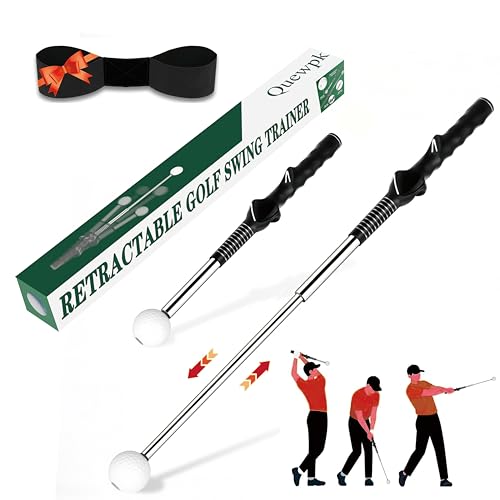
Quewpk combines retractable design with grip training and arm-band feedback. It delivers crisp click feedback to indicate correct swing mechanics, benefiting both beginners and seasoned players in refining rhythm, speed, and power. The ultra-lightweight build (0.7 lbs) supports portability for at-home practice, warm-ups at the range, or travel.
Best for: Right-handed players looking for portable, reliable feedback; travelers who want a compact training stick. Caution: May be less suitable for left-handed players without a corresponding left-handed variant.
TrueBirdie Golf Swing Training Arm Band

The TrueBirdie arm band focuses on preventing the “chicken wing” swing by keeping arms synced with the body throughout the swing. It’s a straightforward, portable option that supports repetition on the driving range and helps transfer range practice to the course. It’s particularly useful for golfers seeking consistent arm-body coordination.
Best for: Range practitioners who want a consistent, arm-syncing cue. Caution: The band alone may require complementary drills to fully address swing plane issues on course play.
Buying Guide: How To Choose The Right Golf Swing Training Aid
- Practice setting: Choose a trainer that fits your typical environment—indoor spaces, backyards, or driving ranges. Consider weight, portability, and whether you prefer a physical guide or purely feedback-based cues.
- Feedback type: If you want immediate tactile or audible cues, look for devices with click feedback or physical guides. If you prefer video or video-supported instruction, select a product that pairs with training videos.
- Grip and hand position: Tools offering grip training help reinforce finger placement, which is crucial for shot accuracy and consistency. Ergonomic grips reduce slippage and fatigue during longer practice sessions.
- Right-handed vs. left-handed: Some models are designed specifically for right-handed players. If you’re left-handed, verify compatibility or seek a decently adaptable option.
- Portability vs. durability: Lighter devices are easier to pack, but heavier units may offer more robust feedback or long-term durability. Balance travel needs with expected use frequency.
- Skill level support: Beginners may benefit from guided swing aids and comprehensive instructional content, while advanced players might prioritize tempo training and refined feedback to correct subtle faults.
- Compatibility with real balls: Some aids require no ball and focus on mechanics, while others simulate real swing with ball interaction. Decide which aligns with your training goals.
- Maintenance: Check for replaceable parts (grips, surfaces) and ease of cleaning, especially for mats and nets used outdoors or in high-traffic practice areas.
Frequently Asked Questions
- What is the main benefit of a retractable golf swing trainer? It provides instant feedback on swing mechanics and rhythm while remaining portable for travel and quick warm-ups.
- Do swing training aids replace actual ball striking? No. They complement on-course practice by improving grip, plane, and tempo, but ball contact is still essential for transfer to play.
- Can these aids help with left-handed golfers? Some tools are hand-specific; check product details for left-handed compatibility or alternative versions.
- Which trainer is best for beginners? Tools offering guided positions, grip training, or comprehensive video instruction tend to help beginners establish fundamentals quickly.
- Are there risks or downsides to using swing trainers? Overreliance on a single aid may limit exposure to real-ball feedback; combine aids with regular practice on the range for a balanced approach.
- How often should I practice with a swing trainer? Start with short daily sessions (10–15 minutes) focusing on one or two cues, then gradually increase duration as technique improves.