When starting out, the right golf ball can make a big difference in distance, feel, and confidence on every swing. This guide highlights five beginner-friendly options that balance soft feel with forgiving core designs, helping new players develop a smoother pace and straighter flight. These picks are suitable for casual rounds, driving practice, and improving approach shots. Each entry explains who benefits most, with clear reasons to choose or avoid based on design features and intended performance.
Buyer overview table:
| Product | Best For | Why It Stands Out |
|---|---|---|
| Callaway Supersoft 2026 | Beginners seeking soft feel and distance | HyperElastic SoftFast Core for speed with soft greenside feel |
| Wilson Profile Distance | Budget-friendly distance seekers | Low compression and inner cover for long, straighter shots |
| TaylorMade Distance+ | Max distance with wind resistance | REACT Speed Core and Extended Flight Dimple Pattern |
| Nitro Maximum Distance | Explosive distance on metal woods | Two-piece titanium core with low spin |
| Honma D1 Distance | Soft feel and long carry | Low spin design with high ball speed and extended flight |
Callaway Supersoft Golf Balls (2026, White)

Features include a HyperElastic SoftFast Core designed for faster driver and iron speed while maintaining a soft greenside feel. The cover system blends distance with durability and features a greenside spin enhancement for better short-game control. Best for beginners who want a soft feel off the club, with reliable distance and a forgiving off-center performance. Caution: thrust toward faster swing tempos can lead to overspin in some conditions, so focus on consistent contact.
WILSON Profile Distance Golf Ball 36 Pack
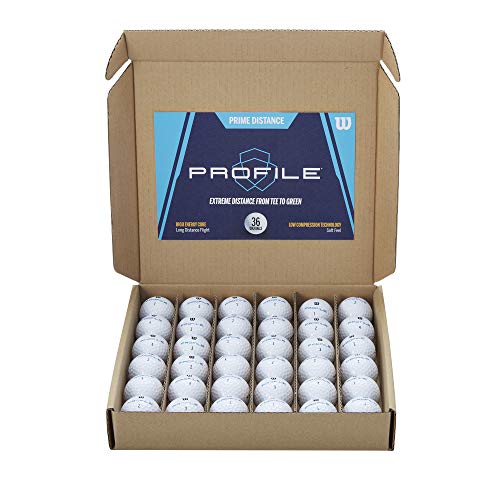
Features include a high-energy core for longer distance, low compression for soft feel, and a specially designed inner cover that reduces spin to maximize distance. Best for beginners who want affordable, consistent distance and a naturally soft feel on short shots. Choose this if you prioritize a budget-friendly option with a comfortable feel. Limitation: fewer spin control options compared to premium models; may not offer the same greenside precision for advanced players.
TaylorMade Distance+ Golf Balls

Designed for speed with the REACT Speed Core and an Extended Flight Dimple Pattern to help resist wind and stay airborne. Best for beginners aiming to maximize distance off the tee while maintaining a stable flight path. Stay online with the Plus Alignment Aid that assists with alignment on drives and putts. Limitation: higher performance features may be less noticeable for players with very slow swing speeds.
Nitro Maximum Distance Golf Balls

Features a two-piece titanium core designed to maximize energy transfer for explosive distance, with a low-spin profile to reduce bite into the wind. The dimple design improves lift and reduces drag for longer, straighter shots. Best for beginners seeking maximum distance with a forgiving feel. Caution: the bright color (pink) may be less preferred by players who want a traditional look.
Honma 2026 D1 Distance Golf Balls

Honma D1 features a low-spin core design with a high-speed outer cover to promote longer carries and straighter trajectories. The extended 368-dimple pattern reduces air resistance for longer, more stable flights. Best for beginners who want a balance of distance and a softer feel around greens. Limitation: durability perceptions can vary with play style and course conditions.
Buying Guide: Key Purchase Considerations
What should beginners look for when choosing golf balls? Consider ball compression, core design, cover material, and flight characteristics. A softer compression typically feels gentler on the hands and helps beginners gain better control, while a higher-energy core can translate into longer drives for moderate swing speeds. Choose a ball with a forgiving cover and a flight pattern that minimizes slicing or hooking tendencies on off-center hits.
Soft Feel vs. Distance
If your priority is a soft feel around the greens, look for low-compression cores and soft cover materials. For distance, prioritize balls with a high-energy core and aerodynamic dimples designed to maintain velocity and reduce drag in wind.
Spin Control for Short Game
Beginners often benefit from balls designed to balance distance with predictable short-game spin. Hybrid cover systems can help improve greenside control without sacrificing distance on full shots.
Durability and Visibility
Durability matters on roughs and practice ranges. Brightly colored balls improve visibility in light conditions and help with tracking flight, especially for learners adjusting to new swings.
Weather and Course Considerations
Wind resistance and aerodynamics play larger roles on open courses. Some balls feature extended flight dimples to help stay aloft in gusty conditions, which benefits beginners playing in variable weather.
Practical Buying Tips
- Start with a 3- or 4-piece golf ball if available in your budget to balance feel and control.
- Try different brands to understand which feel and flight best suit your swing tempo.
- Consider buying a mixed-pack or smaller 12-pack to test several options before committing to a single model.
Frequently Asked Questions
- Q: Which golf ball helps beginners gain distance without sacrificing control? A: Balls with a forgiving low-compression core and a durable cover aim to balance distance with short-game control.
- Q: Are softer balls better for beginners? A: Softer balls can provide a smoother feel and better greenside control for slower swing speeds.
- Q: How important is ball color for a beginner? A: Visibility matters for tracking flight and landing; bright colors can help on practice days.
- Q: Should beginners worry about spin with these balls? A: Moderate spin can aid in stopping on greens; choose a ball with a predictable short-game spin profile.
- Q: How many balls should a new player start with? A: A 3- to 12-pack is a practical starting point to compare performance across models.
- Q: Do professional brands matter for beginners? A: Reputable brands often provide consistent construction and predictable performance, which benefits learners.