Looking for a hands-free round that keeps your bag moving while you swing? This guide showcases top electric golf push carts with follow mode, designed for golfers who want to maintain pace without pushing. These carts are best for players who walk the course, have limited time, or wish to conserve energy for their swing. The following picks emphasize automatic following, battery life, and stability on varied terrain. A quick buyer table follows to help you compare at a glance.
| Product | Key Benefit | Best For |
|---|---|---|
| Tianhong G5 Electric Golf Cart | Smart Follow, 45-hole battery, foldable | Long rounds, all-terrain |
| Axglo e5 Electric Golf Push Cart | Follow Mode, multi-mode control, anti-tipping | Narrow paths, varied terrain |
| KVV Electric Golf Push Cart | Remote control, compact fold | Small cars, easy storage |
| Icango caddy G5 | Auto-follow, 45-hole battery, remote/app control | Tech-minded players, versatile control |
| KEMIMOTO ApexAI | UWB follow, long- range remote, power assist | Precise tracking, tech features |
Tianhong G5 Electric Golf Cart

The Tianhong G5 follows you with smart sensor-based tracking and offers a 45-hole lithium-ion battery for extended rounds. It folds in 3 seconds for easy trunk storage and setup. This cart is best for golfers who want a straightforward follow system with reliable range and a compact footprint. A potential limitation is the need to ensure sensor line-of-sight in dense layouts, which can affect follow accuracy in tight fairways.
Best for: players who value effortless follow capability and quick setup for standard-length rounds. It suits courses with mixed terrain and requires minimal hand effort during play.
Axglo e5 Electric Golf Push Cart

The Axglo e5 combines follow mode with five control options, including a robust manual and cruise settings. Its anti-tipping quad-wheel base supports slopes up to 40 degrees, making it suitable for hilly courses or bridges. This model is best for players who want versatility and stability across varied terrain. A caveat is that the motors and sensors work best with regular maintenance to maintain smooth switching between modes.
Best for: golfers who want flexible control modes and strong incline handling without sacrificing follow convenience.
KVV Electric Golf Push Cart

The KVV cart emphasizes extreme compactness and a hands-free remote control with speeds 1–9. It folds to a footprint small enough for easy trunk storage, and it supports both remote and manual modes. This option is best for golfers who want a lightweight cart that travels well and stores with minimal space. A limitation to watch is the reliance on battery capacity for remote mode when navigating steep grades.
Best for: players seeking ultra-compact storage and flexible remote operation on various terrains.
Icango caddy G5 Electric Golf Cart
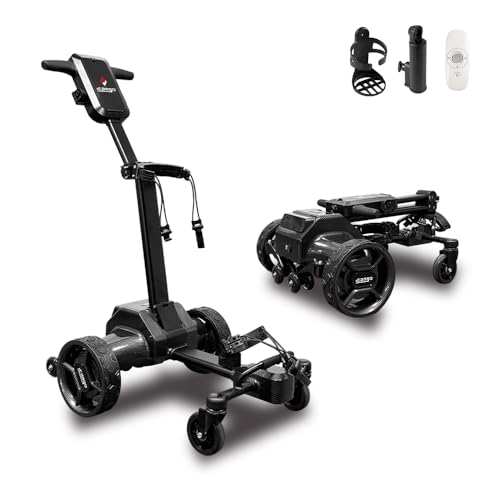
The Icango caddy G5 uses auto-follow with precision sensors and offers a 45-hole lithium-ion battery. It supports multiple control modes—auto follow, remote, app, and smart power assist—giving golfers significant control from a distance or as needed. This model is best for tech-savvy players who want seamless integration with a smartphone or a remote. A potential limitation is the need for charging cycles and app compatibility with different devices.
Best for: golfers who want rich control options and modern tech integration for follow performance.
KEMIMOTO ApexAI Electric Golf Caddy
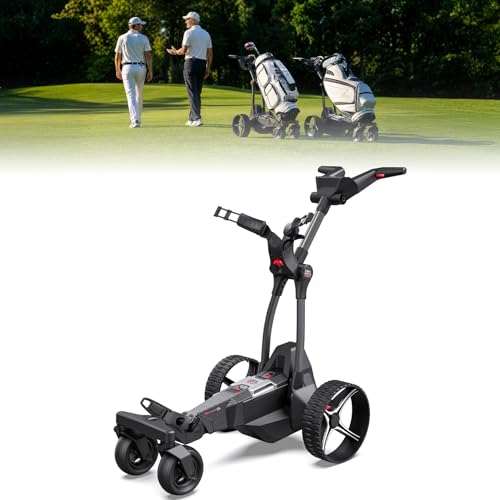
The KEMIMOTO ApexAI uses UWB follow technology for precise tracking and features a long-range remote (up to 492 feet) along with a USB-C power option for charging accessories. Power Assist Mode helps match your walking pace on crowded paths or narrow bridges. This model is best for players who prioritize precise following and extended remote control range. A caution is that the remote range can vary with environmental interference.
Buying Guide
What follow technology fits your game? Look for auto-follow using sensors, UWB, or Bluetooth. UWB generally offers tighter tracking in crowded courses, while Bluetooth-based follow is common but may be less precise at a distance.
How important is control versatility? If you want hands-free following only, a simple follow mode suffices. If you prefer to override and steer, choose carts with multi-mode control (remote, app, power assist, cruise, manual).
What about battery life and charge time? A 45-hole capacity typically supports two rounds. Consider fast-charging capabilities and battery longevity to avoid mid-round recharges.
Stability and terrain handling matter. Anti-tipping designs and dual/multi-motor configurations help on slopes and rough patches. If you play hilly courses, prioritize models with higher incline ratings.
Portability and storage: If your vehicle has limited trunk space, pick a cart with a compact folded size and a quick folding mechanism. Check folded dimensions to ensure it fits your vehicle.
Remote range and app compatibility: For tech-focused players, ensure the remote’s range meets your course layout and that the app supports your device and OS version.
FAQ
- Do follow carts work on all terrains? Most follow carts handle paved paths and fairways well; some are optimized for light rough and hills, but performance varies by model.
- What is a typical battery life in holes? Many models provide around 36–45 holes on a single charge, depending on speed and terrain.
- Can follow carts be used in manual mode? Yes. Most units switch to manual or remote control when auto-follow is not ideal.
- Is there a risk of the cart colliding with me? Modern carts use sensors to maintain a safe distance; however, users should stay within line of sight and avoid tight corridors when possible.
- Are app-controlled carts compatible with iPhone and Android? App compatibility varies by model; check the product app store listing for device requirements and OS versions.
- What maintenance is needed? Regular cleaning of sensors, battery charging cycles, and periodic checks on wheels and motor connections help maintain performance.