For golfers seeking to emulate Cam Smith’s precise putting setup, a high-quality mirror training aid can rapidly improve alignment, eye position, and stroke path. This article highlights five top putting mirrors designed for indoor and outdoor practice, shows who each product is best for, and explains why they stand out. Whether you’re a casual weekend player or aspiring to lower your Handicap, these options help establish a repeatable routine and repeatable results.
Buyer snapshot: The top picks below focus on immediate feedback, consistent alignment, and practical portability. The table summarizes each product’s core benefit to help you compare at a glance.
| Product | Brand | Best For | Why It Stands Out |
|---|---|---|---|
| EyeLine Golf Putting Mirror, Alignment Training Aid | EyeLine Golf | Immediate alignment feedback | Clear face line and gate slots for real-time correction |
| KINGTOP Classic Golf Putting Mirror | KINGTOP | Portable practice anywhere | Compact size with included tees and carry bag |
| THIODOON Ultra-Thin Golf Putting Mirror | THIODOON | Low-profile practice | 3mm thickness; anti-scratch acrylic; durable |
| EyeLine Quick Look Mirror & 70 Degree Edge Rail | EyeLine Golf | Compact setup with edge rail | Edge rail for arc-focused practice; quick setup |
| EyeLine Putting Mirror with Groove Plus | EyeLine Golf | All-in-one setup checks | Large surface to verify eyes, shoulders, and putter-face |
EyeLine Golf Putting Mirror, Alignment Training Aid
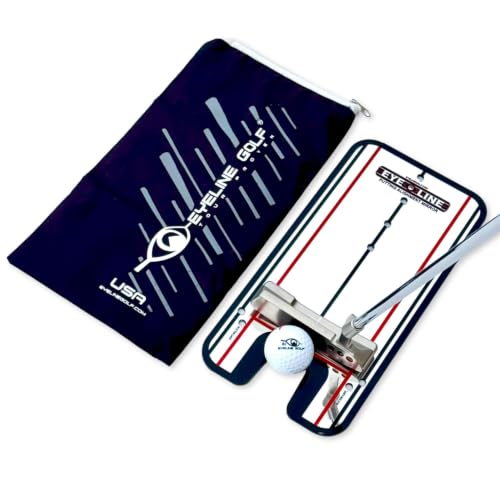
Best for immediate, comprehensive feedback. This mirror shows eye position, ball position, putter-face alignment, and setup lines at a glance. The clearly marked face line helps you square the putter to your intended start line, enabling on-the-spot correction of alignment mistakes. The built-in gate slots let you create a custom gate with tees or compatible posts to verify center-face contact. Choose this if you want a single, reliable station to check multiple aspects of your stroke in one view. A limitation is that it emphasizes setup and alignment more than shoulder rotation in isolation.
KINGTOP Classic Golf Putting Mirror

Best for portable practice sessions. The KINGTOP mirror is a compact 12″x6″ size that fits easily in a golf bag and is ideal for both indoor mats and outdoor greens. It focuses on aligning the eye position, putter face, and stroke path for enhanced accuracy. The included 5 tees and carry bag add convenience for on-the-go practice, making it a smart pick for golfers who want a quick setup anywhere. It may be less about multi-sensor feedback and more about reliable, repeatable alignment cues.
THIODOON 3mm Ultra-Thin Golf Putting Mirror

Best for a near-ground, true-feel practice. This mirror’s ultra-thin 3mm profile sits almost level with the turf, reducing visual elevation that can affect your stroke. The anti-scratch acrylic construction keeps lines crisp, while the included tees and carry bag boost setup flexibility. It’s well-suited for players who want a realistic transition from mirror work to real greens, but the ultra-thin design may require careful handling to avoid edge damage in rough environments.
EyeLine Quick Look Mirror & 70 Degree Edge Putting Rail

Best for players who want a compact setup with a performance edge. This mirror focuses on fixing alignment errors before they cost strokes, with a lightweight, durable design that travels well. It’s especially useful for check-ins on eye position and putter-face alignment on the move. Note that it does not show shoulder alignment, so you might pair it with a second tool if shoulder tracking is crucial to your game.
EyeLine Golf Putting Mirror, Groove Plus

Best for a comprehensive setup check. The Groove Plus mirror provides a large surface to inspect eye position, shoulder alignment, posture, and stroke motion, all from a single practice station. The face-alignment line supports squaring the putter at address, and the adjustable gate helps verify consistent center-face contact through impact. It’s a versatile option if you want an all-in-one tool for repeatable practice and on-line stroke feedback.
Buying Guide
What should you look for when choosing a cam smith-style putting mirror?
- Feedback scope: Do you want eye position, shoulder alignment, face square lines, or a combination? Consider mirrors with multiple feedback features or gate systems for center-face contact.
- Portability: If you practice in multiple locations, prioritize a compact, lightweight model with a carry bag or included tees.
- Durability: Look for shatter-resistant acrylic or durable plastic with anti-scratch surfaces to keep markings clear over time.
- Alignment aids: Mirrors with clearly marked alignment lines or adjustable gates can accelerate consistency and help you groove a repeatable start line.
- Practice versatility: Some mirrors work better on indoor mats, carpet, or real greens. Choose one that fits your typical practice environment.
Practical Usage Tips
- Set up a consistent eye position relative to the ball before every putt to reduce misalignment.
- Use the face line to square the putter at address and then test the result with the gate or rail to ensure a straight start line.
- Incorporate a mirror routine into your warm-up to improve tempo and release.
FAQ
- Q: Can a putting mirror really improve my stroke consistency? A: Yes, by providing immediate visual feedback on eye position, shoulder alignment, and putter-face orientation, which helps you repeat a correct setup.
- Q: Do these mirrors require complex setup? A: Most are designed for quick setup with simple alignment guides and optional gates for gate-path practice.
- Q: Are Mirrors suitable for both indoor and outdoor use? A: Many models are portable and work well on putting mats, carpets, or greens, but consider weatherproofing and stand stability for outdoor use.
- Q: Should I use more than one mirror? A: If you want comprehensive feedback, pairing a large, all-in-one mirror with a compact quick-look option can cover both broad and targeted checks.
- Q: What’s the best starting point for a beginner? A: Start with a portable mirror that emphasizes eye position and face alignment, then add a gate or edge rail for stroke-path feedback as you improve.
- Q: Do these replace coaching? A: They supplement coaching by providing consistent practice feedback but do not substitute for personalized coaching when needed.