Whether you’re battling water hazards or mud-choked banks, a reliable ball retriever saves time and effort on the course. This article highlights five top picks that balance durability, reach, and grip. Best for players who frequently play near water, mud, or dense rough, these picks help you retrieve golf balls with minimal bending and maximum efficiency. The summary table below quickly compares reach, construction, and best-use scenarios.
| Product | Reach | Head & Shaft | Best For | Notes |
|---|---|---|---|---|
| BIRDIEBLAST Golf Ball Retriever (9ft–20ft) | 9–20 ft | Stainless steel shaft; nylon head | Water hazards, rough terrain | Double-sided pressure pickup |
| Callaway Golf Ball Retriever (6–15 ft) | 6–15 ft | Aluminum alloy shaft; dual zip headcover | Casual to mid-range retrievals | Ergonomic handle |
| Josongslax Golf Ball Retriever (9–20 ft) | 9–20 ft | Sturdy shaft; PC head; rubber grip | Wet and muddy terrain | Patented dual-sided pickup |
| Datrek IG20203 IGOTCHA JAWZ (10 ft) | 10 ft | Single-piece head; co-molded grip | Compact, quick grabs | Ultra-compact design |
| GEAVOUED Golf Ball Retriever (9–20 ft) | 9–20 ft | High-strength stainless steel; two-sided pickup | Durability and reliability | Two-sided pickup head |
BIRDIEBLAST Golf Ball Retriever Telescopic

The BIRDIEBLAST retriever uses a pressure-activated, double-sided pickup design that grabs balls from both sides. This feature improves efficiency when working near banks, water, or uneven terrain. The head is a high-strength nylon, resisting impact to maintain a firm grip on the ball, while the reinforced stainless steel shaft adds anti-bending durability for long-range reach. Best for golfers who frequently encounter water and mud and want a robust, flexible tool.
Best for: players who need maximum reach without bending and rely on a strong grip. Better for frequent water-adjacent retrievals. Caution: although durable, lengthy shafts can be heavier to maneuver for casual players.
Callaway Golf Ball Retriever for Water

Callaway’s retriever features a telescoping aluminum alloy shaft that minimizes bending and extends up to 15 feet. The ergonomic, sure-grip handle supports comfortable use during long rounds. This model is ideal for golfers who want a lightweight, easy-to-carry option with a reliable extension and simple retrieval mechanism. Best for mid-to-long retrieves with a focus on comfort and quick access.
Best for: players who prefer a lighter, ergonomic design for straightforward retrievals. Choose this if you want a slim profile to fit into bags more easily. Caution: the shorter 6-foot option is limited for larger water hazards without full extension.
Josongslax Golf Ball Retriever

Josongslax emphasizes a patented dual-sided pickup and a replaceable PC head for added durability. The anti-slip rubber grip performs well in wet conditions, reducing hand fatigue during extended sessions. The design mimics natural four-finger gripping motions, making ball retrieval feel intuitive and quick. Best for: golfers who play in wet courses and want a long-lasting, easy-to-maintain head. Limitation: some users may prefer a broader head for rougher terrain.
Datrek IG20203 IGOTCHA JAWZ

The IGOTCHA JAWZ offers a single-piece head with a new co-molded rubberized surface for secure ball gripping. Its ultra-compact profile makes it easy to store and quick to deploy on the course. Best for players who prioritize compact equipment and straightforward, reliable ball grabbing. Caution: shorter reach may not cover deep water hazards on longer courses.
GEAVOUED Golf Ball Retriever
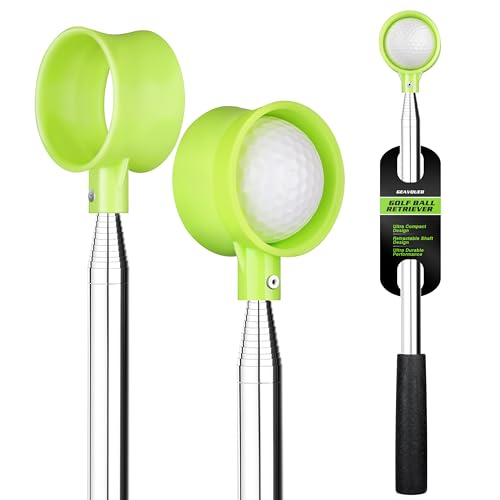
GEAVOUED emphasizes an effortless dual-sided pickup with a thicker stainless steel shaft for reduced bending during max extension. The high-strength rubber grip is ergonomically designed to decrease hand fatigue in wet conditions, making this a solid all-weather option. Best for: players seeking a sturdy, two-sided pickup with enhanced durability. Caution: heavier models can be harder to maneuver for beginners.
Buying Guide: Key Considerations For Your Next Buy
- Reach range: How far do you typically need to retrieve balls? Consider models that extend to at least 12–15 feet for typical water hazards.
- Head design: Two-sided or single-piece heads affect ease of use and durability on wet or muddy terrain. A replaceable or rugged head extends lifespan in frequent use.
- Shaft material: Stainless steel offers strength and bend resistance; aluminum is lighter but may bend more under full extension.
- Grip comfort: Rubber grips reduce hand fatigue, especially in cold or wet conditions. An ergonomic design can improve control during long rounds.
- Weight and balance: Heavier units can feel sturdy but may be tiring. Lighter tools are easy to carry but may offer less momentum in tough retrieves.
- Storage and portability: Look for telescoping designs that collapse compactly to fit in bags or carts without snagging on gear.
- Head protection: Some models include head covers or protective features; consider if you frequently walk with a bag or rack.
Frequently Asked Questions
- What is the typical reach I should look for in a golf ball retriever? Aim for at least 12–15 feet to handle common water hazards and longer banks.
- Is a two-sided pickup head better than a single-head design? Generally, two-sided heads improve ball grip from multiple angles, especially on uneven ground.
- Are aluminum retrievers lighter than stainless steel ones? Yes, aluminum is lighter but can sag or bend more at full extension; stainless steel offers greater bend resistance.
- Should I buy a retriever with a replaceable head? Replaceable heads extend lifespan, especially if you retrieve many balls on rough courses.
- Do I need a padded or ergonomic handle? An ergonomic handle reduces hand fatigue during extended rounds and improves grip in wet conditions.
- What maintenance helps extend a golf ball retriever’s life? Clean after use, dry fully, check for cracks, and replace worn grips or heads as needed.