Answering the needs of parents and young players seeking an easy, forgiving start in golf’s short game. This guide highlights five junior sand wedges chosen for different ages and swing styles, helping kids gain confidence around greens. The best picks are suited for beginners, early learners, and developing juniors who want better control, higher launches, and more spin on approach shots. A quick buying table follows to compare key details at a glance.
| Product | Age/Height Range | Loft | Best For |
|---|---|---|---|
| AGXGOLF Tour Series Boy’s Right Hand Teen Edition Sand Wedge | Teens, Howell, MI-built | Typically around 56° | Older juniors seeking soft feel and reliable backspin |
| Golf Sand Wedges with Carbon Shaft (Blue, 9-12Y) | Girls and Boys 9–12 | 56° | Beginner juniors needing light carbon shaft |
| 56 Degree Loft Golf Sand Wedge for Junior Golfers (Blue) | Right-handed juniors 9–12 | 56° | Sand play and short-game development |
| Orlimar ATS Junior Wedge Golf Club (Yellow, 3 & Under) | Very young juniors, under 36 inches | 55° | First full swing introduction; high launch |
| Orlimar Golf ATS Junior Wedge (Red/Black, 9–12) | Boys 9–12 | 45.5° | Short game practice with a lighter, easy-to-handle wedge |
Note: The table provides a quick snapshot. For more detail, read each product section below to understand who each wedge suits best and why it’s a strong choice for improving junior short games.
AGXGOLF Tour Series Boy’s Sand Wedge

Best for teens prepared to take on greens with more backspin and a soft feel. Built at AGXGOLF’s Howell, Michigan facility, this wedge uses strong stainless steel for durability and a soft-faced impact that helps produce better backspin on chips. The shaft options include a boy’s or girl’s flex stainless steel and junior flex graphite, giving flexibility to match a young player’s swing tempo. Choose this if you want a higher feel of control and a wedge built around a junior-friendly balance between weight and forgiveness.
Caution: The exact loft and specs may vary by batch; verify suitability for your child’s height and swing speed before purchase.
Golf Sand Wedges With Carbon Shaft (Blue, 9-12Y)

Best for beginner junior players needing an easy entry into the sport. This wedge features a 56-degree loft with a carbon shaft that is lightweight yet strong, promoting swing speed and control. It’s a solid choice for girls and boys who want a stable short-game club that’s forgiving on bunker shots and high-trajectory approaches. The carbon shaft helps minimize swing fatigue while maintaining accuracy for younger wrists.
Caution: Carbon shafts can be more sensitive to torque; ensure the grip and shaft feel suits your child’s grip size and swing mechanics.
56 Degree Loft Junior Wedge (Blue, 9–12)
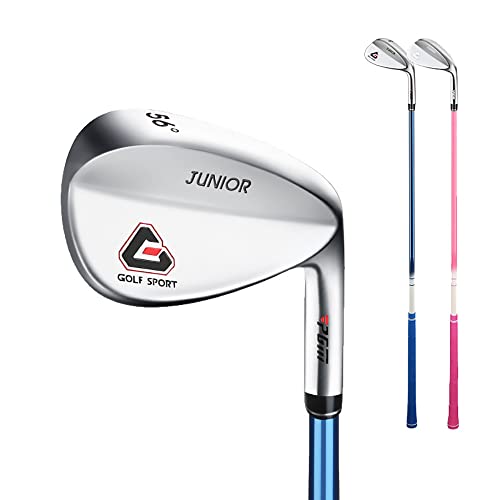
Best for advancing short-game skills with a dedicated youth profile. The 56-degree loft is well-suited for juniors who are learning bunker play and precision around the greens. It’s designed specifically for right-handed young players and helps with consistent distances on approach shots. The wedge is built to support a natural, kid-friendly swing, reducing the risk of fatigue during practice sessions.
Caution: For some very young players, a higher loft wedge or driver-adjacent clubs might be necessary as a stepping stone to full golf set compatibility.
Orlimar ATS Junior Wedge (Yellow, 3 & Under)

Best for the youngest players starting out in golf. This 19-inch wedge is designed for kids under 36 inches tall and uses a flexible composite shaft to promote a high launch toward or around the green. The 55-degree loft helps younger players get the ball airborne quickly, making it easier to learn contact and distance control during basic practice. Choose this if you’re prioritizing early confidence and fundamental swing development.
Caution: Very young players may quickly outgrow this size; monitor growth and readiness for a longer, standard junior set as skills improve.
Orlimar ATS Junior Wedge (Red/Black, 9–12)

Best for slightly older juniors who want a lighter, easy-to-handle wedge. This wedge offers a pitching-like feel with a 45.5-degree loft ideal for controlling short-game trajectories on greens. The Red/Black design is visually intuitive for kids, helping them visually align and target greens more confidently. It’s a good step up from the smallest junior sizes as players transition to more mature clubs.
Caution: The lighter weight can feel too low in some swing styles; ensure it pairs well with the child’s current grip and stance to maximize accuracy.
Buying Guide: Key Considerations For Selecting A Junior Sand Wedge
- Age and height fit: Junior clubs are size-specific. Match the wedge to your child’s height and swing speed for optimal control and accuracy.
- Loft and forgiveness: A 56-degree loft is common for junior wedges and helps with bunker exits and high-trajectory chips. Higher forgiveness correlates with easier contact on miss-hits.
- Shaft material and weight: Carbon shafts are lightweight and promote faster swing speed but may feel stiffer to beginners. Steel shafts offer durability and stability; choose based on swing tempo.
- Ease of use: Look for wedges with a wide, forgiving sole and a raised leading edge to reduce digging. This helps avoid fat shots and encourages consistent contact.
- Durability: Junior clubs should withstand frequent practice and travel. Stainless steel constructions tend to be durable and reliable.
- Start-to-green progression: Consider wedges that come in starter sets or have age-appropriate length to help young players transition smoothly to full-sized clubs as they grow.
Frequently Asked Questions
- What loft is best for a junior sand wedge?
– A common choice is around 56 degrees, which helps get the ball airborne quickly and out of sand with good spin. - Should juniors prefer carbon or steel shafts?
– Carbon shafts are lighter and can boost swing speed for younger players, while steel shafts offer durability and stability; choose based on comfort and control. - At what age should a child move to standard-sized wedges?
– Most players transition once they show consistent contact and improved distance control, typically around ages 9–12, but it varies by child. - Are junior wedges designed for left-handed players?
– The products listed here are right-handed; look for left-handed junior wedges if your child swings left. - Can a junior wedge replace a putter during practice?
– It can be used for short-game drills, but it should complement a full practice routine with multiple clubs. - What should I check before buying a junior wedge online?
– Verify loft, shaft type, overall length, and whether the club is sized for age and height. Confirm return policies in case of fit issues.