New golf swing aids offer structured feedback and guided motion to help players improve tempo, alignment, and connection. This guide highlights five popular models suited to different players—from beginners building fundamentals to intermediate golfers polishing their rhythm. Each product is evaluated for who it’s best for, benefits, and a practical limitation to consider before buying.
Buyer-friendly quick reference:
- Best for beginners: Callaway Swing-Easy Golf Swing Trainer Aid
- Best for versatile practice: Golf Swing Trainer Ball with Arm Straps & Neck Lanyard (Dual-Mode)
- Best for muscle memory: The Connector Golf Training Aid
- Best for home practice: Orange Whip Golf Swing Trainer Aid
- Best for immediate feedback: Proimpactor Swing Trainer
Below is a concise product snapshot table to help compare key aspects at a glance.
| Product | Best For | Key Benefit | Notable Limitation |
|---|---|---|---|
| Callaway Swing-Easy Golf Swing Trainer Aid | Beginners | Promotes one-piece takeaway and in-sync arms/body | Limited data on wearability during longer practice sessions |
| Golf Swing Trainer Ball with Arm Straps & Neck Lanyard | All-around practice | Two training modes for flexible sessions | Setup may feel bulky for tight spaces |
| Proimpactor Golf Swing Trainer New Pro Heoseok | Intermediate players | Focused trainer for swing mechanics | Limited publicly listed specs |
| The Connector Golf Training Aid | In-the-room practice | Instant feedback and posture correction | Foam ball may wear quickly with heavy use |
| Orange Whip Golf Swing Trainer | Rhythm and flexibility | Patented design for tempo, balance and strength | Patented hardware may feel different for first-time users |
Callaway Swing-Easy Golf Swing Trainer Aid

Best for beginners seeking a straightforward, one-piece takeaway training aid. Features focus on keeping arms and body in sync during the swing, reinforcing a fundamental motion that supports a natural, connected sequence. Suited for both right- and left-handed players and adaptable to various sizes, making it a versatile starter tool.
- Type: Golf training aid
- Key benefit: Encourages in-sync swing and one-piece takeaway
- Best practice context: Ideal for creating consistent starting motion and improving alignment
Who it’s for: Beginners and early-intermediate golfers seeking dependable feedback on basic swing mechanics. Why selected: Its simplicity helps reinforce a core motion without excessive complexity. Caution: May not provide advanced feedback for high-speed or highly customized swings.
Golf Swing Trainer Ball With Arm Straps & Neck Lanyard

Best for versatile practice with two training modes. The dual-mode system includes wearable arm straps and a removable neck lanyard, enabling a switch between full-armed connection and longer practice when fatigued. This flexibility helps players adapt to different session lengths and skill levels.
- Modes: Arm straps and neck lanyard
- Key benefit: Maintains arm connection and provides adjustable practice intensity
- Best practice context: Good for reinforcing arm-body connection across varying drills
Who it’s for: Players who want adjustable training to fit short sessions or longer, fatigue-managed practice. Why selected: The dual-mode design supports progress across multiple practice styles. Caution: Arm straps may require careful positioning to avoid friction during longer sets.
Proimpactor Golf Swing Trainer New Pro Heoseok
Best for intermediate players focusing on refined mechanics. This trainer emphasizes a controlled swing sequence and targeted feedback. Selected for its potential to help refine timing and path without requiring advanced tech. Caution: Availability and exact specifications may vary by listing; verify current details before purchase.
- Core focus: Swing mechanics feedback
- Key benefit: Improves path consistency and takeaway control
- Best practice context: Useful for mid-range practice goals and tempo development
The Connector Golf Training Aid

Best for instant feedback and posture correction. The Connector locks arms and body into a single connected unit to reinforce proper mechanics throughout the full swing. It’s ideal for putting, chipping, or full swings, with immediate feedback when form deviates. It helps players feel the correct triangle position during impact.
- Primary benefit: Immediate feedback on arm connection and posture
- Best practice context: Excellent for building repeatable swing paths and reducing loss of connection
- Caution: Foam build may wear with heavy, frequent use; inspect for wear
Orange Whip Golf Swing Trainer
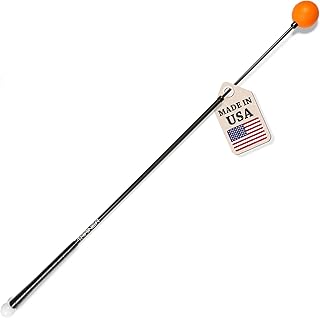
Best for rhythm, balance, and long-term tempo development. The Orange Whip is designed to aid flexibility and tempo, helping players build a smooth swing through repetition. Suitable for practicing with a real-feel rhythm that translates to on-course performance. Caution: Some users may need time to adapt to its unique weight distribution.
- Strength: Tempo and balance training
- Best practice context: Warm-ups, conditioning, and rhythm-focused drills
- Limitation: Requires time to adapt to its feel and weight
Orange Whip Swing Trainer (Alternate Link)
Best for players seeking a dedicated tempo-building tool with a live-swing feel. The trainer is widely used for rhythm development and injury-conscious practice. Choose this if you want a single, enduring aid for warm-ups and routine maintenance. Caution: The device’s weight and balance design may not suit every swing style immediately.
- Primary value: Rhythm and tempo development
- Best practice context: Warm-ups and routine rhythm work
- Limitation: Learning curve for weight distribution
Buying Guide: How To Choose A New Golf Swing Aid
- Goal alignment: Decide whether you want to fix tempo, improve arm-body connection, or reinforce posture. Different aids target different fundamentals.
- Practice setting: Consider where you’ll train most—home, range, or travel. Some aids are easier to use in small spaces; others are portable but require setup time.
- Skill level compatibility: Beginners benefit from simpler, guided motion tools. Intermediate players often seek precise feedback to refine mechanics.
- Feedback type: Some aids offer physical cues (tension, pressure), while others provide instant motion feedback or structured drills.
- Durability and maintenance: Inspect build materials (foam, straps, connection points) and be prepared for wear with frequent use.
- Space and storage: If space is limited, prioritize compact aids or those that fold or store easily.
Frequently Asked Questions
- What is a swing trainer aid best used for?
Swing trainer aids help reinforce fundamentals such as grip, takeaway, arm-body connection, tempo, and posture through guided motions or feedback.
- Do these aids work for left-handed players?
Yes. Several models are designed to accommodate both left- and right-handed golfers, offering universal fit or reversible use.
- Can I practice with these indoors?
Many aids are suitable for indoor practice, especially those that focus on rhythm, posture, or arm connection. Ensure enough space and use appropriate soft gear when necessary.
- Which aid is best for immediate feedback?
Items like The Connector Golf Training Aid provide instant feedback on arm connection and posture during the swing.
- Should I buy multiple aids or one comprehensive tool?
For beginners, starting with a simple trainer may be best to build a foundation. Intermediate players may benefit from a dual-mode or multi-function tool for broader drills.