Answering the common question “what are the best 14 year old golf clubs?” this guide highlights select youth sets designed for teens and late-teen beginners. These sets emphasize lightweight materials, forgiving heads, and age-appropriate lengths. The top picks are best for teens starting or refining their game, with options for both right- and left-handed players. The table below helps you compare key picks at a glance.
| Product | Best For | Key Feature |
|---|---|---|
| PGA Tour Youth Golf Club Set (12-17) | Teens starting or improving | Lightweight stand bag, enhanced mallet putter |
| Tour Edge HL-J Junior Complete Set | Balanced beginners to early intermediates | 350cc driver, easy-to-hit fairway wood |
| 1GoTo-G 7 Pieces Set (12-14) | Lightweight, easy swings | Ultra-lightweight graphite shafts |
| Aspire XD1 Teen (13–16) Right Hand | Teen sizing and speed control | Graphite woods, steel irons for balance |
| PGF Gold TP JR Junior Set | Affordability with forgiveness | Junior-friendly design, high forgiveness |
PGA Tour Youth Golf Club Set – 12-17, 10-Piece, Golfgen

Best for teens who want a tour-inspired starter kit. This 10-piece set includes a driver, hybrid, irons, mallet putter, and a lightweight stand bag. The official PGA TOUR collaboration supports consistent, beginner-friendly performance. The redesigned bag adds storage, a rain cover, and ergonomic backpack-style straps for easier transport. The mallet putter features an alignment aid to boost accuracy. Use this if your teen wants a complete, cohesive set that mirrors professional gear, with built-in alignment help for steadier greens play. Caution: the bag’s weight may be noticeable for younger players within the target age range.
Tour Edge HL-J Junior Complete Golf Set
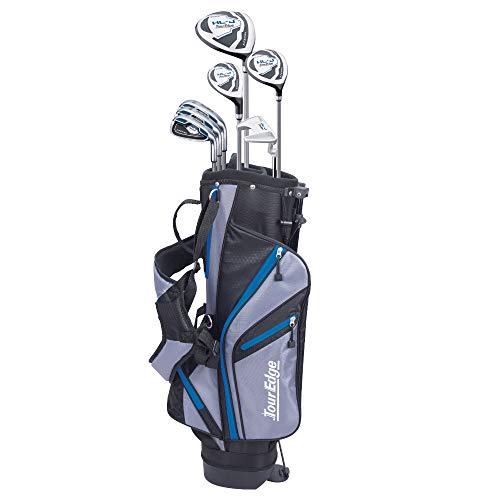
This set is best for beginning-to-intermediate teen players who want easy-to-hit clubs with forgiving performance. The 350cc high-MOI driver provides longer, higher drives, while the low-profile fairway wood helps lift shots quickly. The included hybrid adds versatility off the turf, and the overall club design emphasizes balance and control. Choose this if you’re seeking a well-rounded, school-season-ready kit that emphasizes ease of use over specialized performance. Limitation: the data notes standard junior bag and content; confirm club lengths fit your teen’s height.
1GoTo-G 7 Pieces Kids Golf Clubs Set

Best for 12-14-year-olds needing a compact, lightweight kit with essential clubs. This 7-piece set includes a driver, 5-wood? or hybrid, irons (7 and PW), and a putter, with a stand bag and headcovers. The shafts are designed to be ultra-light for easier swing mechanics and faster swing speeds. Opt for this if you want a leaner starter set that’s easier to manage during swing development. Caution: some players may outgrow the set quickly as they lengthen into taller heights.
Aspire XD1 Teen Golf Club Set (Right Hand, 13–16)

Best for teens who need a balanced mix of graphite and steel shafts to tune swing speed and control. The set targets ages 13–16 with a weight distribution suitable for teen strength and speed. It includes a driver, fairway wood, hybrid, irons (7–PW), a putter, a stand bag, and three head covers, offering a complete, pro-style kit. Choose this if you want a teen-focused option that emphasizes both power and precision. Limitation: left-handed option is a separate listing, so ensure you select the correct handedness.
Aspire XD1 Teen Golf Club Set (Left Hand, 13–16)
This left-handed version mirrors the right-handed XD1, designed for teens who swing from the left. It provides the same graphite woods and steel irons balance, ensuring consistent feel and control. Best for left-handed teens seeking a complete, teenage-appropriate kit. Caution: ensure the model matches the player’s dominant hand to maintain proper setup and progression.
PGF Gold TP JR Junior Golf Set

Best for budget-conscious buyers who still want a junior-optimized design. The PGF Gold TP JR set centers on lightweight construction with junior-length shafts and forgiving heads for confidence on the course. It offers a value-oriented path into youth golf with a focus on ease of use and sense of accomplishment. Limitation: “Gold TP JR” styling may appeal aesthetically, but verify club sizes align with your teen’s height and swing style for best results.
Buying Guide: Key Purchase Considerations
- Size and length: Ensure clubs match your teen’s height and swing. Look for age or height ranges in product descriptions.
- Weight: Lighter sets are easier for beginners and faster to swing, but confirm strength suitability.
- Materials: Graphite shafts are lighter and can help speed; steel shafts offer stability and feedback for growing players.
- Head design: Forgiving, perimeter-weighted heads improve off-center hits and distance.
- Set completeness: Decide if you need a full 10-piece kit or a leaner 7-piece option for early development.
- Left vs right hand: Confirm handedness to ensure proper club alignment and swing mechanics.
- Bag and accessories: A lightweight stand bag with rain cover adds value, especially for practice sessions.
Frequently Asked Questions
- What age should a teen consider upgrading clubs?
Most players transition to larger, standard-length junior sets around ages 13–16 as they grow taller and faster. - Are graphite shafts better for teens?
Graphite shafts are lighter and can improve swing speed for developing players, but steel shafts offer greater feedback for learning control. - Is a 10-piece set necessary?
A 10-piece set provides everything a beginner needs, including a putter and driver. A smaller set can work for early stages and is easier to handle. - Should left-handed teens buy a specific left-handed set?
Yes. Choose a left-handed version to ensure correct alignment and swing mechanics. - How important is the bag in a youth set?
A good stand bag with storage helps organization and transport between practice and the course, which supports regular use. - Do teens outgrow junior sets quickly?
Growth varies; consider sets with adjustable or longer lengths and plan for a future upgrade within 1–2 years for rapidly growing players.