Answering the search for reliable launch monitors that track club path, this guide highlights five top options. Each product is chosen for different player needs—from high-precision studio-grade systems to portable, cart-friendly devices. Whether you’re a serious fitter, a weekend golfer, or a coach, these monitors help you analyze club path, ball flight, and impact data to improve accuracy. The brief summary table below lets you compare core capabilities at a glance.
| Product | Best For | Key Benefit (Club Path) |
|---|---|---|
| Foresight GCQuad | Coaches and fitters | Quadrascopic imaging for precise club head measurements |
| Voice Caddie Portable | Indoor/outdoor practice | Long battery life with real-time shot data |
| FlightScope Mevo Gen2 | Portable practice & home setup | 3D Doppler tracking with extensive data parameters |
| Bushnell Launch Pro i Circle | All-in-one setup with driving range compatibility | Course overview and simulator integration |
| Garmin Approach R10 | Home practice, range training | Comprehensive data with training mode and task-based feedback |
Foresight GCQuad Golf Launch Monitor
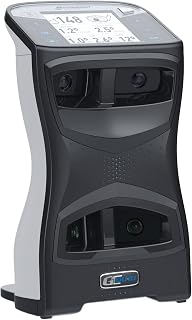
The GCQuad uses Quadrascopic imaging to deliver detailed ball and club head performance analysis. It is praised for indoor and outdoor reliability and is a multiple Golf Digest Editors’ Choice Award winner. It measures club head speed, horizontal club path, smash factor, and impact location directly on the unit with no extra hardware. This makes it a strong pick for fitters, instructors, and dedicated players who need precise club path data. A potential caution is its higher setup footprint and cost, which may be a consideration for casual players.
Voice Caddie Portable Golf Launch Monitor

This portable option targets indoor and outdoor practice with up to 20 hours of battery life. It provides real-time shot data tracking and is designed for golfers who want a straightforward way to monitor key metrics during practice sessions. Best for players who value battery longevity and easy setup. A limitation is that some users may prefer a more robust, studio-grade data suite for detailed club path analysis.
FlightScope Mevo Gen2 Portable Launch Monitor

The Mevo Gen2 emphasizes portability with a robust data set, offering 18 swing data parameters and 8 E6 simulation courses. It uses patented FlightScope Fusion Tracking with 3D Doppler data for both indoor and outdoor use, including GPS overview and Shot Tracer. This makes it ideal for golfers who want a compact system that still delivers extensive analytics, plus a built-in simulator bundle that supports practice and play. It may be less ideal for those needing ultra-high-end studio precision beyond consumer-grade expectations.
Bushnell Launch Pro i Circle Edition

The Launch Pro i Circle integrates a course GPS overview with a simulator setup for an all-in-one practice and training station. It is best for players who want the convenience of a unified system for on-range play and at-home practice. It may require a larger space and a compatible environment to maximize its course and simulator features. Choose this if you want a versatile, range-ready setup that can also support detailed practice sessions.
Garmin Approach R10 Portable Golf Launch Monitor

The Garmin Approach R10 emphasizes home and practice use with a focus on training value. It supports indoors and on the driving range and features data tracking for club head speed, ball speed, launch angle, spin, and more, through the Garmin Golf app. It includes training mode and a dispersion chart that helps users understand shot patterns. Best for casual to intermediate players who want integrated app-based analytics. A potential limitation is that it may not match the ultra-high precision of studio-grade systems in very demanding environments.
Buying Guide: Key Purchase Considerations
When selecting a launch monitor that tracks club path, consider the following factors to fit your needs and space:
- Accuracy versus price: Higher-end models offer more precise club path measurements but come at a higher cost. Match accuracy with your training goals.
- Portability and setup: Decide whether a compact, battery-powered unit suits your practice space, or a stationary system is preferable.
- Data depth: If you want extensive club and ball data, prioritize devices with multiple data parameters and robust analytics software.
- Indoor versus outdoor use: Some monitors excel in controlled indoor environments, while others are designed to perform well outdoors with ambient light variations.
- Simulation and course options: If you enjoy virtual rounds, look for monitors offering built-in simulations or easy course integration.
- App integration: Consider how the device pairs with mobile apps for ongoing training, shot history, and drills.
- Space requirements: Check the required hit area and safety space, especially for high-velocity data capture and indoor use.
FAQ
- What is club path in a launch monitor?
Club path is the horizontal movement of the club head at impact and helps explain the direction of the shot. A monitor that tracks club path provides insights into swing direction and potential fixes for slices or hooks.
- Are portable launch monitors sufficient for serious fitting?
Portable options offer substantial data for practice and coaching, but studio-grade systems may deliver higher precision for professional club fitting.
- Can these devices be used indoors?
Yes. Several models are designed for indoor use with stable imaging and robust data collection, though lighting and space can affect performance.
- Do launch monitors require additional hardware?
Many models are self-contained, but some may benefit from compatible software or accessories for expanded features like simulations or drills.
- Which monitor is best for beginners?
Devices with clear interfaces and integrated training modes, such as Garmin Approach R10 for home use, work well for beginners seeking structured practice.
- How important is battery life?
Battery life matters for portable use and practice sessions away from power sources. Longer life reduces interruptions during training.