Answering the need for precise green reading, this guide highlights top golf green reading tools that help players of all skill levels adjust to slope, contour, and speed. The best picks are ideal for serious amateurs, club players refining their short game, and coaches teaching line reading. Below, you’ll find a quick product comparison and detailed sections to help you choose confidently.
Quick comparison table
| Product | Best For | Key Benefit | Country Availability |
|---|---|---|---|
| SlopeMaster ProGreen Reader | Beginners to intermediate | High-precision slope readings | USA |
| BreakMaster Digital Green Reader | Players seeking exact breaks | LCD readouts for break direction and amount | USA |
| OLE ANDIGO Golf Green Reading Tool | Portable practice & training | Foldable design with multiple accessories | USA |
| DESELL Golf Green Reader (2 Pack) | Budget-conscious practice sets | Two readers for multi-point slope training | USA |
| JEINAPA High-Precision Golf Green Reader | Portable, premium feel | Ultra-lightweight aluminum with leather case |
SlopeMaster ProGreen Reader — High-Precision Green Reading
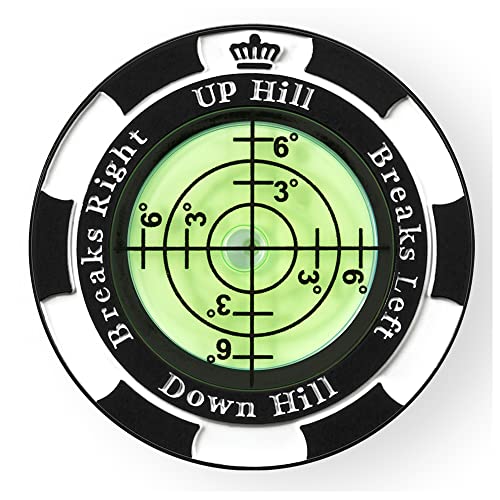
The ProGreen Reader from Prodigora is designed for accurate slope reading with a high-precision bubble level. It helps players adjust for green contours to improve distance control and alignment. Best for golfers who want a simple, reliable way to read greens before every putt. The tool is easy to place behind the ball and read the slope with practice, supporting steady improvement in putting accuracy.
Who it’s best for: beginners and mid-level players who want a clear, repeatable method to gauge slope without complex setup. Why chosen: its straightforward operation and reliable bubble level help users quickly translate slope into better line decisions. Limitation: it relies on user interpretation of slope—the practice loop is essential for consistent results.
BreakMaster Digital Golf Putting Green Reader

The BreakMaster is a precision electronic device that identifies downhill direction and measures break angle, delivering a full readout on an LCD display. It’s designed to train the eye to read breaking greens and chart greens for practice. This tool is well-suited for players who want objective feedback on breaks and want to lower scores on tricky greens.
Who it’s best for: players who frequently face rapid greens with clear breaks. Why chosen: its explicit readouts and charting capability help build a mental map of breaks. Limitation: electronic readouts may require setup time on busy courses, and users should ensure calibration for consistent reads.
OLE ANDIGO Golf Green Reading Tool — Foldable Practice Aid

This foldable tool is designed for on-the-go practice. It includes multiple accessories, such as golf target holes and gates, to improve direction sense and trajectory line. The instrument helps quickly determine the best line and speed, making it ideal for practice greens and training sessions. It is notably portable and simple to store.
Who it’s best for: players who want a compact, multi-feature training aid. Why chosen: the foldable design and included accessories provide a flexible training setup. Limitation: foldable devices may require careful handling to maintain alignment accuracy over time.
Prodigora SlopeMaster ProGreen Reader — Green Reading Advantage

This Green Reader provides accurate slope readings with a high-precision bubble level. It’s designed to speed up play by quickly identifying the slope behind your ball and supports better putting with consistent practice. Best for golfers who want a repeatable method of reading greens during rounds and practice alike.
Who it’s best for: players seeking a reliable, easy-to-use tool to tune in on slope. Why chosen: proven utility in practice and on-course use. Limitation: identical features to the first ProGreen model may mean choosing between color variants based on personal preference.
DESELL Golf Green Reader — 2 Pack

The 2-pack DESELL reader set offers high-precision bubble visibility with black liquid to improve bubble visibility under outdoor light. It’s a practical option for training with a partner or for repeated practice sessions on different greens. Best for households or teams that want multiple readers for simultaneous practice.
Who it’s best for: two players practicing together or a coach with multiple students. Why chosen: value and training versatility with two units. Limitation: both readers share the same readout limits; accuracy depends on placement and user technique.
OLE ANDIGO Golf Putting Trainer — Track Reading
This trainer emphasizes track design to extend ball roll and provides speed measurements along the path. It helps test green speed by providing a fixed reference point and supports learning how speed translates into line. Best for practice scenarios focused on green speed and line control.
Who it’s best for: players who want a more dynamic practice tool with speed assessment. Why chosen: its explicit focus on speed and line makes it a strong core training aid. Limitation: it is primarily a practice aid and may be less practical during actual rounds without a dedicated practice space.
JEINAPA High-Precision Golf Green Reader (Silver)

JEINAPA’s high-precision reader uses a sensitive bubble level to reveal uphill, downhill, and side-to-side slopes, delivering professional-grade accuracy on any green. The aluminum body is lightweight and durable, paired with a genuine leather case for protection and portability. Best for golfers who value premium materials and pocket-friendly design.
Who it’s best for: players who want a premium, portable tool with a protective case. Why chosen: superior build quality and ease of transport. Limitation: premium materials may come at a higher perceived cost compared to entry-level options.
Buying Guide: How to Choose a Golf Green Reading Tool
- Purpose and setting: Are you practicing at home, on the range, or reading greens during rounds? Choose a tool that suits your primary setting (portable, quick reads vs. detailed break analysis).
- Readout type: Do you prefer a simple bubble level read or an LCD/high-precision readout? Electronic readouts provide specifics, while a bubble level offers quick, intuitive results.
- Portability: Consider size, weight, and whether a leather case or protective container is included for on-the-go use.
- Durability and materials: Aluminum bodies tend to be lighter and durable; ensure the device won’t mar greens or suffer from weather exposure.
- Training features: If you want to chart greens or practice with speed lines, look for kits with multiple accessories or practice aids.
- Maintenance: Easy-to-clean surfaces and bubble visibility under various lighting conditions help maintain accuracy.
Frequently Asked Questions
- Do green reading tools improve putting accuracy for all players? Yes, by providing more consistent reads and a repeatable method to gauge slope and breaks, which translates to improved line decisions.
- Are digital readouts more reliable than bubble levels? Digital readouts can offer precise angle measurements, but bubble-level tools are quicker and require no power.
- Can these tools be used on any green surface? Most are designed for standard greens; always check product notes for compatibility with different turf conditions.
- Is a protective case necessary? A case helps prevent scratches and keeps the tool accessible, especially for travel or bag storage.
- Should I buy multiple readers for practice? A second reader can be useful for practice with a partner or for drills that require simultaneous reads.
- What should I consider about the price? Higher-priced options often emphasize premium materials and build quality; assess value against your practice frequency and goals.