Looking for a center shaft mallet putter that delivers stable alignment, predictable roll, and easy alignment on greens? This guide highlights five top options suited for a range of players—from beginners seeking forgiving feel to accomplished golfers chasing consistent distances. Each pick is evaluated for its design, face technology, and how its center-shafted, mallet head helps promote straighter putts. Use the quick-reference table below to compare core strengths at a glance.
| Product | ||
|---|---|---|
| Cleveland HB Soft 2 Putter (Model 11), 34″ | Straight stroke players seeking consistent feel | Dynamic groove milling and weight tuning for stable distance |
| Cleveland HB Soft 2 Putter (Model 11), 35″ | Slight arc or straight strokes with consistent tempo | Same Face technology with extended length for reach and feel |
| TaylorMade Spider ZT Putter 33″ | High-MOI stability and precise alignment | Toe-up design with refined sole shaping for accuracy |
| PGM Golf Putter 34″ | Players wanting low torque and smooth roll | Stepped shaft minimizes torque; high-MOI mallet head |
| Roykaw Zero Torque Putter 35″ | Seeking straight putts with reduced face rotation | Zero-torque design and toe-up balance for repeatable strokes |
Cleveland HB Soft 2 Putter (34″) Center Shafted

The 34-inch Cleveland HB Soft 2 Putter emphasizes speed-optimized face technology. Its dynamic groove milling helps normalize ball speed across a larger striking area for more consistent distances. This model suits straight-stroke players who prioritize predictable roll and alignment aids that pair with a center-shaft design. A 20-gram weight is embedded in the butt end of the shaft on 35-inch and longer options, contributing to a steadier feel through the stroke.
Best for: Players who favor a straight stroke with a stable, soft feel and consistent distance control. The 34″ length is ideal for average to shorter setups with a focus on precise alignment and contact. Caution: the perceived feel can vary with green speed, so testing on a practice green is recommended to confirm distance consistency.
Cleveland HB Soft 2 Putter (35″) Center Shafted

The 35-inch version offers a similar Speed Optimized Face and Stroke Specific design as the 34″ model, tuned for players who benefit from a longer setup and a more pronounced sightline. This option supports both straight and slight arc strokes with the same 9-model lineup synergy for hosel style, toe hang, alignment, and grip compatibility. The added length can alter head-to-ball alignment visually, so deliberate practice helps translate the longer setup into consistent starts.
Best for: Players who prefer a longer reach and a more prominent alignment feel while maintaining a soft, stable impact. Better for: golfers who can maintain a smooth tempo with a longer shaft. Caution: ensure your posture accommodates the longer length without overreaching on shorter greens.
TaylorMade Spider ZT Putter Right Hand 33 Inches

The Spider ZT combines high-MOI stability with a toe-up shaft orientation and improved sole shaping. This model focuses on consistent alignment from address to impact, leveraging a design that helps keep the face square through the stroke. The KBS-patented bore enters toe-ward near the CG to reduce torque, making it suitable for golfers who want a stable, repeatable stroke and a familiar Spider lineage in a compact 33-inch head.
Best for: Players needing strong stability and repeatable alignment, especially on inconsistent greens. Choose this if you want a modern Spider design that emphasizes stability over swing flexibility. Caution: the 33″ length may feel short for taller players or those who prefer a longer setup for sightlines.
PGM Golf Putter 34″ Right Hand Mallet

The PGM mallet combines a precision-engineered stepped steel shaft with a low center of gravity and a high-MOI mallet head. This setup aims to deliver smoother, more consistent rolls, especially on off-center hits. The design helps minimize torque, promoting a straighter path through impact. Best for players who want a straightforward setup with predictable feedback and feel.
Best for: Players seeking reduced torque and a stable start line; a good fit for mid-to-high handicap players who benefit from forgiveness on mis-hits. Limitation: the stepped shaft design may feel unfamiliar to players used to standard straight shafts, requiring practice to optimize alignment.
Roykaw Zero Torque Golf Putter 35″
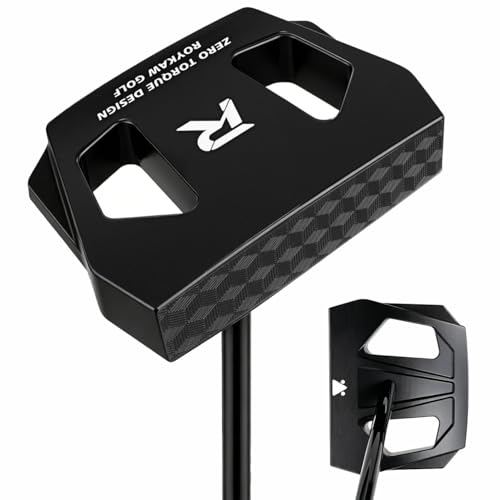
The Roykaw Zero Torque puts emphasis on a toe-up balance and zero-torque construction to promote a square face at impact. Its 1° forward lean and 25 mm onset behind the face are designed to encourage a stable stroke and faster forward roll with less twisting. The grooved face assists with audible feedback and helps players judge contact more clearly.
Best for: Golfers who want a straightforward, repeatable stroke with reduced twisting and consistent start lines. Limitation: some players may require an adjustment period to the toe-up design if their natural stroke favors a more traditional, face-centered setup.
Cobra Classic Mallet Putter

The Cobra Classic Mallet Putter features a CNC-machined face for a soft feel and a confident sound at impact. Its tour-inspired alignment topline and single sightline simplify setup, while the traditional steel shaft provides stable control. This option appeals to players who want classic reliability combined with modern alignment aids.
Best for: Players who prefer a traditional feel with precise alignment cues. Limitation: some might find the topline less forgiving on mis-hits compared to ultra-forgiving mallet designs.
Craftsman Golf Head Cover for Center-Shafted Mallet

The Craftsman headcover protects center-shafted mallet putters with a magnetic closure and a distinctive green checkered look. It fits most center-shafted mallet putters and helps prevent damage during transit and storage. This accessory is best for players who want a secure, stylish cover that guards the putter head.
Buying Guide: Center Shaft Mallet Putters
- Who should consider center-shaft mallets? Players seeking forgiving alignment and a centered eye line may benefit most, especially on longer greens or when developing a consistent stroke.
- What matters most: weight and balance. Look for models with higher MOI for stability on mishits and a shaft layout that keeps the face square through impact.
- Face technology and consistency. Models with groove milling (Speed Optimized Face) or grooved faces can improve distance control, but testing on a practice green helps confirm feel and roll for your pace.
- Length and fit. Standard lengths range from 33″ to 35″. Longer lengths can improve posture and alignment for some players, while others prefer shorter setups for tighter greens.
- Head design and sightlines. Mallet heads with clear alignment aids help with setup; consider how the top line and sightline align with your eye position at address.
- Material and feel. A stable steel shaft and a solid head construction contribute to consistent feedback. Feel is subjective, so try different textures and weights if possible.
FAQ
- What is a center shaft mallet putter? A putter with a mallet-style head and a shaft that centers over the face, designed to aid alignment and stability during the stroke.
- Do center-shaft mallets improve accuracy? They can improve alignment and stability, which often leads to more repeatable lines, especially for players with straight-back straight-through strokes.
- Which length should I choose? Shorter lengths (around 33″) suit players who like a compact setup; longer lengths (34″–35″) can help with posture and alignment for others.
- Is face technology important? Yes, features like groove milling or grooved faces help manage ball speed and roll, contributing to consistent distance on off-center hits.
- What about grip and weight? Oversized grips can improve stability, and internal weights (like a 20g shaft weight) can influence swing feel and consistency.
- How do I know if a particular model is right for me? Consider stroke type (straight vs. slight arc), preferred feel, length, and alignment aids. Practicing with different models on a practice green helps determine the best fit.