Looking for a reliable golf mat hitting strip to upgrade indoor practice? This guide highlights five top options that balance realism, durability, and joint comfort. Each pick is best suited for different players—from serious simulators to DIY setups and casual home practice. Use the quick reference table to compare core features at a glance.
| Product | Best For | Why It Stands Out |
|---|---|---|
| The Indoor Golf Shop SIGPRO Hitting Strips | Professional simulators | Realistic surface with replaceable strips; joint-friendly design |
| Country Club Elite 1×3-Foot Golf Hitting Strip | Real-tee users | Accepts real tees; authentic fairway feel; sturdy backing |
| Golf Hitting Strip, Replaceable Turf for Simulator Mats | Budget-friendly sims | Replaceable turf; compatible with many mats; good vibration dampening |
| Beaver Tail Golf Simulator Mat | Joint protection | Thick foam layer for impact absorption; realistic strip |
| Premium Dual-Turf Golf Mat | Large practice areas | Big surface; dual turf with strong anti-slip base |
The products above address common indoor-practice needs: realistic feedback, durability, and comfort on joints. Each section below gives a concise overview, the target buyer, and a practical limitation to consider.
The Indoor Golf Shop SIGPRO Hitting Strips
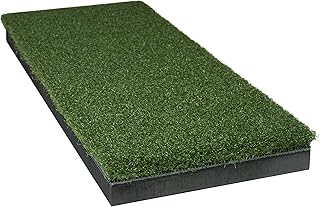
The Indoor Golf Shop SIGPRO Hitting Strips are designed for professional-grade simulator setups. These replaceable strips offer a realistic surface and joint-friendly play, suitable for serious players and high-use facilities. Best for: professional sims and advanced home setups.
Caution: Replaceable strips require proper alignment for consistent feedback; ensure compatibility with your mat system.
Country Club Elite 1×3-Foot Golf Hitting Strip

Best For: Players who want to use real tees and enjoy a fairway-like downward strike. The mat uses dense nylon fibers over a foam pad to deliver honest feedback on fat, thin, and pure strikes. It’s ideal for dedicated indoor practice with real-tees. Limitations: Real-tee usage requires compatible tees and may demand stable backing to maintain flatness during swings.
Key reasons to choose: Realistic fairway feel, robust backing, and tee compatibility. It’s a strong pick for players prioritizing authentic tee shots and durable construction.
Golf Hitting Strip, Replaceable Turf for Simulator Mats
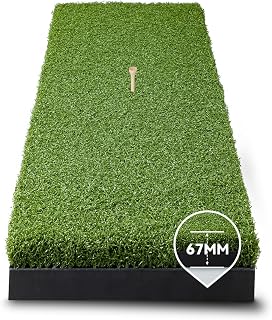
Best For: Players building a flexible simulator mat setup. The replaceable turf helps manage wear and tear, while compatibility with various mats provides versatility. Limitation: Some users may need to source compatible tees or backing to maintain smooth surface alignment.
Why selected: Its replaceable turf design extends the life of your mat and keeps the feel consistent across sessions. It suits DIY simulator builders and home gyms seeking cost-effective upkeep.
Beaver Tail Golf Simulator Mat

Best For: Players seeking joint protection during long practice sessions. The Beaver Tail strips emphasize a realistic feel with a thick foam layer that compresses to simulate turf divots. Selection note: It can be used standalone or as part of a larger simulator mat. Caution: Availability and delivery may vary by region.
Why selected: The joint-focused design helps reduce fatigue and discomfort, enabling longer practice periods without sacrificing shot feedback.
Premium Dual-Turf Golf Mat

Best For: Practice spaces that demand ample room and versatile turf options. This mat offers two turf surfaces for varied shot feedback and a thick base designed for stability. Limitation: Large size requires more floor space and proper storage when not in use.
Why selected: The large surface area supports full swings and varied shot types, making it ideal for dedicated indoor driving and chipping practice.
Buying Guide — Key Purchase Considerations
- Surface realism: Look for strands or fibers that mimic fairway turf and a density that provides clear ball feedback on fat, thin, and clean hits.
- Durability and replaceability: If you practice regularly, choose mats with replaceable strips or turf sections to extend the overall life of the setup.
- Joint and wrist comfort: Mats with added foam layers or shock-absorbing backings help reduce fatigue during longer sessions.
- Tee compatibility: If you use real tees, ensure the mat supports tees with secure placement and minimal movement.
- Size and stability: Ensure the mat’s footprint fits your space and that the base prevents slipping during forceful swings.
- Compatibility with simulators: For indoor simulators, verify the mat is designed to work with your software and projector layout.
Frequently Asked Questions
- What is a “hitting strip” in golf mats?
Answer: A hitting strip is the surface layer where the ball contact occurs. It’s often replaceable to maintain feedback and turf feel without replacing the entire mat. - Do these mats protect joints during practice?
Answer: Some mats include thicker foam or cushioned layers to absorb impact, reducing soreness over long practice sessions. - Can I use real tees with these mats?
Answer: Several models are designed to accept real tees, but check the product specifications for compatibility and recommended tees. - Which mat is best for large practice spaces?
Answer: The Premium Dual-Turf Golf Mat offers a large surface area suitable for expansive practice and varied shots. - Are replaceable turf options worth it?
Answer: Yes, replaceable turf can significantly extend mat life by allowing targeted wear areas to be swapped out as needed.