Plastic practice golf balls are ideal for golfers who want to train in restricted spaces, indoors, or in backyards without risking damage to property or furniture. This guide highlights five top options, explains who each is best for, and helps you compare flight, durability, and visibility. Whether you’re a beginner, a parent practicing with kids, or a seasoned player refining tempo, these selections offer safe, affordable ways to improve swing consistency and ball-striking fundamentals.
| Product | Why It Stands Out | Best For |
|---|---|---|
| Joyberg 24 Packs Practice Golf Balls | Symmetrical hollow design with 26-hole surface, durable polyurethane construction, low risk of cracking | Beginners and families practicing in small spaces |
| Full Choice Practice Golf Balls (20 Pack) | High-visibility, flight-limiting aerodynamics, soft EVA material | Backyards and garages needing quiet, controlled practice |
| KOFULL Plastic Golf Balls, 24/Pack | Lightweight, limited flight, six bright colors for easy tracking | Indoor/outdoor drills and solo or group practice |
| Franklin Sports Plastic Practice Golf Balls | Durable polyurethane blend, durable and visible lime color, designed for high repetition | Warm-up, chipping and putting practice |
| SKLZ Limited-Flight Practice Impact Golf Balls | Regulation-size feel with limited flight for small-space training | Precision drills in tight spaces |
Introduction continues below with practical guidance and direct comparisons between the chosen products to help you pick the best option for your space, goals, and budget.
Joyberg 24 Packs Practice Golf Balls

Best for families and beginners practicing in limited space. The 42mm hollow design with 26-hole surface supports consistent spin and a predictable flight within a safe range. Crafted from durable polyurethane, these balls resist cracking and denting for longer training sessions. They are lightweight and safe around pets, furniture, and windows, making them ideal for indoor garages or apartment practice. A potential limitation is that they may have lower resilience under very aggressive swings compared with real golf balls, so use as a skill-building tool rather than a replacement for outdoor practice.
Full Choice Practice Golf Balls (20 Pack)

Best for backyard and garage drills needing controlled flight and quiet operation. These EVA-based balls blend rubber-like flexibility with plastic durability, resisting cracks and deformation. The scientifically designed aerodynamics limit flight distance, reducing risk to nearby objects. Their soft construction lowers noise on impact, which helps when practicing around family. A minor caveat is that the flight is intentionally limited, so this may feel different from real balls on longer-range shots.
KOFULL Plastic Golf Balls, 24/Pack

Best for indoor or outdoor drills with a party or training context. These hollow, light 4.2-gram balls mimic real golf ball trajectories while offering limited flight to protect surroundings. They come in six bright colors for quick tracking and visibility, which is helpful for learning alignment and swing path. The main limitation is that the “fake” feel differs from real ball feedback, so progress should be mapped to actual club results over time.
Franklin Sports Plastic Practice Golf Balls
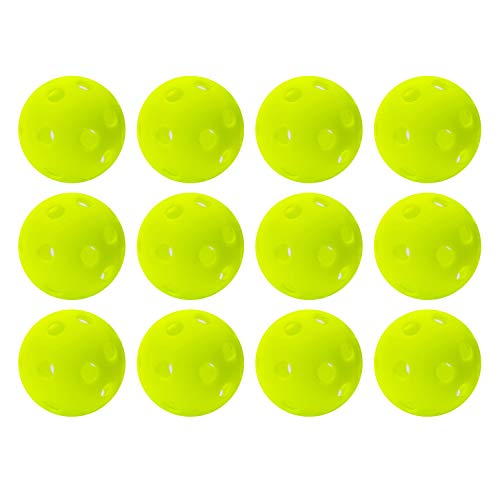
Best for chipping and putting practice indoors or outdoors where durability is a priority. The polyurethane blend is designed to flex and rebound, offering extended life compared to basic plastic balls. The lime-green color improves visibility, aiding stroke alignment and target focusing. A potential limitation is that the flight may not perfectly simulate longer approach shots, so pair with other practice tools for full-range training.
SKLZ Limited-Flight Practice Impact Golf Balls

Best for practicing in very small spaces while maintaining a sense of real ball impact. These are regulation-size in feel but designed with limited flight to prevent far-reaching errant shots. They are a strong option for swing tempo, contact, and short-game drills in apartments or basements. A caveat is that some players may notice less of the ball’s true feedback compared to full-flight golf balls, so adjust expectations accordingly.
Buying Guide: Key Considerations For Plastic Practice Golf Balls
- Flight vs. space: Choose limited-flight models for small areas to protect surroundings and avoid chasing balls.
- Material and durability: EVA and polyurethane blends tend to last longer and withstand repeated swings in training.
- Visibility: Bright colors help track ball trajectory and locate them quickly after swings.
- Sound and disruption: Softer plastics reduce noise, making them suitable for indoor practice near family or neighbors.
- Target use: Use chipping and putting-focused options for short-game work; use limited-flight balls for full-swing practice in constrained spaces.
- Quantity and cost: Bulk packs offer more practice opportunities for less per-ball cost but may include varying color or texture.
FAQ
- Q: Are plastic practice balls safe for indoor use around pets and furniture?
A: Yes, many models are designed to be lightweight and gentle on surroundings, making them suitable for indoor spaces with pets or kids. - Q: Do these balls mimic real golf ball feedback?
A: They mimic basic flight and impact, with limited flight in many models; they are best for developing swing fundamentals rather than full-range shots. - Q: Which is best for beginners?
A: The Joyberg 24 Packs and KOFULL 24/Pack are good starting points due to affordability, visibility, and forgiving flight characteristics. - Q: Can I use these for outdoor practice?
A: Yes, most are suitable for backyards or ramps, but limited-flight designs help prevent damage to property and neighbors. - Q: How many balls should a new player start with?
A: A 20–50 ball range is convenient for consistent practice sessions, allowing frequent repetitions without constant re-racking.