If your goal is a straight, consistent putting stroke, these putters are chosen for players who want minimal face rotation and reliable alignment. This guide highlights five options optimized for straight-back, straight-through strokes, with clarity on who each is best for and why. Whether you’re a beginner or a seasoned player seeking better control, these picks emphasize stability, alignment, and predictable short-game performance.
Summary table of selected products:
- Cleveland HB Soft 2 Putter — Best for players seeking consistent distance control and a proven straight-stroke design.
- Roykaw Zero Torque Golf Putter — Best for players desiring zero-torque stability and a toe-up balance.
- PGM 34″ Zero Torque Putter — Best for beginners and mid-skill players wanting high forgiveness and square alignment.
- Ram FX-04 CNC Milled Square Mallet Putter — Best for golfers who value precise milling and strong alignment aids.
- PGM 34″ Zero Torque Putter (Ball Retrieval) — Best for players who want built-in convenience without sacrificing stability.
Cleveland HB Soft 2 Putter (Model 11) — Straight Stroke Ready

The Cleveland HB Soft 2 Putter is designed to normalize ball speed across a larger striking area, helping you achieve more consistent distances on straight-putt paths. It features a dynamic groove milling pattern and an alignment system tailored to straight or slightly arced strokes. This model includes a heavier 20 g weight in the butt end of the shaft on all models 35″ and longer to ensure a consistent swing feel across different shaft lengths. Best for players who want a tuned feel and predictability in short putts.
Who it’s best for: players prioritizing consistent distance control and a stable feel in a straight stroke. Why selected: its Speed Optimized Face and universal straight-stroke design align well with a focused, straight-line putting approach. Caution: availability of model variations may affect grip or shaft length choices; verify your preferred setup before purchase.
Roykaw Zero Torque Golf Putter — Straight, Stable
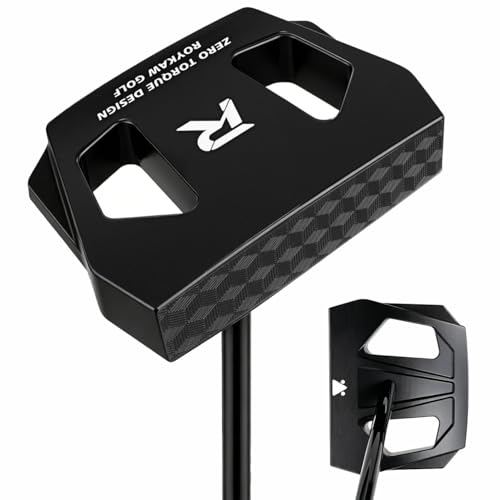
Roykaw’s Zero Torque design features a toe-side shaft placement and a 1° forward lean that assists in keeping the face square through the stroke. The construction promotes straighter putts with reduced twisting, combining a toe-up balance and a precise shaft insertion angle for steady alignment. A grooved face supports faster forward roll and clearer feedback on every putt. Best for players seeking minimal face rotation and a stable stroke from setup to impact.
Who it’s best for: golfers who want a compact, stable stroke with enhanced directional control. Why selected: zero-torque engineering and toe-up design are specifically aimed at minimizing twisting on straight-back, straight-through putts. Caution: some players may prefer a heavier feel or a different shaft length than offered in specific markets.
PGM 34″ Zero Torque Putter — Beginner Friendly
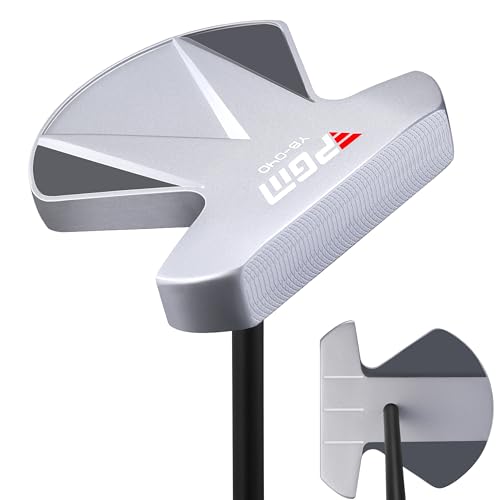
This PGM model emphasizes zero-torque stability with a 0° toe hang (face balanced) and a center shaft design that aids a straight stroke. It offers high forgiveness and low deviation, making it suitable for beginners seeking consistent, straight-line putting. The combination of balance and alignment helps players keep the face square through impact. Best for learners who want a straightforward, square-to-square setup.
Who it’s best for: beginners and players seeking dependable stability on straight putts. Why selected: the face-balanced structure and centered shaft support predictable, straight-line performance. Caution: some golfers may outgrow a fixed-weight feel as skills progress and may need to adjust grip or length accordingly.
Ram FX-04 CNC Milled Square Mallet Putter — Precision Alignment

The Ram FX-04 combines a square mallet head with CNC milled precision, designed to enhance alignment and consistency for straight-back, straight-through putting. The head shape and face balance contribute to easier alignment and forgiveness on off-center hits. Included headcover helps protect the putter between rounds. Best for players who value exact milling quality and straightforward alignment tools.
Who it’s best for: players who rely on precise milling and clear alignment cues. Why selected: a square mallet with face balance supports stable straights and reduces the tendency to open or close the face during stroke. Caution: mallet heads can feel less compact than blade-style putters; choose this if you prefer larger alignment aids and a forgiving profile.
PGM 34″ Zero Torque Putter With Ball Retrieval

This model shares Zero Torque stability with a toe-up balance that resists twisting for a straight line. It uses a center shaft connection to keep the face square and features a built-in ball pickup hole for convenience on the green. Best for golfers who want a straight-stroke putter with added practice-time efficiency. Caution: integrated ball retrieval may not suit players who prefer a minimalistic head design.
Buying Guide: Key Considerations For Straight-Stroke Putters
Selecting the right putter for a straight stroke hinges on alignment aids, toe balance, and how the head interacts with your typical setup. Consider the following factors to match your game:
- Face balance vs. toe hang: Face-balanced putters (0° toe hang) favor straight-back strokes, while slight-toe hang helps with gentle arcs. For pure straight lines, prefer face-balanced or zero-torque designs.
- Head shape: Mallets offer alignment cues and forgiveness, while blades emphasize feel. For straight-line stability, mallets with square alignment tends to be beneficial.
- Center shaft positioning: Center-shafted putters often promote natural alignment to a straight path, reducing twisting during the stroke.
- Weight and balance: Heavier heads and added shaft weights (like 20 g in some Cleveland models) can stabilize the swing, particularly on longer putts.
- Groove and face technology: Grooved or milled faces can improve forward roll and consistency, important for straight shots where roll impact matters.
- Length and grip: Ensure the length supports a comfortable posture and the grip size matches your hand size to avoid tension in the stroke.
FAQ
- What makes a putter best for a straight stroke? A straight-stroke putter emphasizes face stability, alignment aids, and a design that minimizes face rotation during the stroke.
- Should I choose a mallet or blade for a straight line? Mallets generally offer better alignment aids and forgiveness for straight puts, while blades emphasize feel. Try both to see which aligns with your stroke consistency.
- Is zero-torque design essential for straight putts? Zero-torque helps reduce twisting and keeps the face square, which supports straight-line putting for many players.
- Can length affect straight-line performance? Yes. A length that fits your posture reduces tension and helps you maintain a consistent, straight path.
- Do I need a built-in ball retriever? A ball retrieval feature adds convenience but isn’t essential; it should not compromise the head’s alignment or balance.
- What should I test before buying? Test alignment, weight feel, and how the putter responds to a straight-back stroke in practice greens or simulators.