Answering the common buying question: which 500‑yard range finder best fits your needs? This guide compares five top options, highlighting who they’re best for and why each was chosen. Ideal for hunters, golfers, and tactical shooters, these models cover fast readings, rugged design, and useful features like angle compensation and continuous scan. The table below summarizes key strengths to help you decide quickly.
| Product | Best For | Key Benefit | Limitations |
|---|---|---|---|
| TIDEWE Hunting Rangefinder | Hunters in wooded terrain | Fast 0.46s readings, continuous scan | Rugged, but basic offset features |
| REVASRI Hunting Laser Rangefinder | All‑around hunting and golf | Multi‑mode with memory, high accuracy | More modes can feel complex for beginners |
| REVASRI Golf Rangefinder with Slope | Golfers and tournaments | Slope and pin lock with vibration | Slope mode may be restricted for some tournaments |
| AOFAR HX‑700N | Budget-conscious beginners | Two basic modes, easy to use | Limited advanced features |
| Leupold RX‑1400i TBR/W Gen 2 | Long‑range shooters and bow hunters | Flightpath and angle‑compensated ranges | Higher price point |
TIDEWE Hunting Rangefinder With 700 / 1000Y Capabilities

The TideWe rangefinder combines 6x magnification with multiple distance modes, including straight‑line and horizontal distance, plus speed and continuous scanning. Best for hunters who need quick, on‑the‑fly readings in wooded environments. It measures from 3 to 700 yards with ±1 yard accuracy and responds in about 0.46 seconds, supporting rapid target checks in fast‑paced hunts. Its lightweight, camo housing makes it easy to carry on long treks. Best for: bow hunters and tree stand setups where speed matters. A limitation is that some users may want more advanced ballistic features beyond distance and speed readings.
REVASRI Hunting Laser Rangefinder With 1000 Yards Range

This model offers seven functions in one device, including scanning, multiple measuring modes, and memory to restore previous settings after shutdown. It supports continuous measurements of multiple targets and includes an angle, height, and horizontal distance readout. Best for: hunters who also engage in golf or long‑range shooting and want a single device for varied scenarios. Choose this if you value memory recall and multi‑target continuous scanning; a potential limitation is interface complexity for casual users.
REVASRI Range Finder For Golf With 1000 Yards And Slope
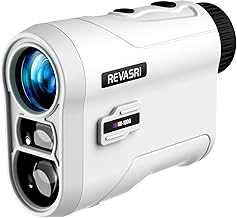
This 1000‑yard golf rangefinder emphasizes slope compensation, flag‑pole lock, and vibration feedback to confirm data. It’s ideal for golfers who want precise distance to the pin with optional slope data (for practice or permitted play). Best for: golfers who need reliable distance with slope compensation; avoid this if tournament rules prohibit slope data in your event. It includes a rechargeable battery and a clear display, and it’s suitable for general hunting in addition to golfing needs.
AOFAR HX‑700N Hunting Range Finder

The HX‑700N emphasizes high precision in a compact package, with six‑times magnification and distance readings from 5 to 700 yards. It is a strong entry point for beginners or budget‑minded buyers who want a straightforward hunting tool with two basic modes: range and speed. Best for: new hunters or occasional range finders who value simplicity and cost efficiency. Use this if you don’t need advanced modes; be aware that fewer features may limit versatility in complex hunting or range scenarios.
Leupold RX‑1400i TBR/W Gen 2 With Flightpath
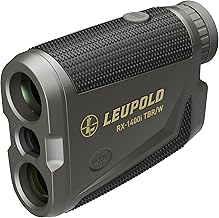
Leupold’s RX‑1400i TBR/W Gen 2 specializes in long‑range accuracy and ballistic calculations, with True Ballistic Range and Wind (TBR/W) technology and Flightpath for archers. It can provide angle‑compensated ranges and hold points for wind, offering robust performance for long‑distance shooting and bow hunting. Best for: long‑range shooters and bowhunters who need precise, physics‑based targeting data. A higher price point may be a consideration for budget shoppers; ensure you need the advanced ballistic features to justify the cost.
Buying Guide: How To Choose The Right 500 Yard Range Finder
Key questions to guide your decision:
- What is my primary use? Hunting in dense cover, golf on flat courses, or long‑range shooting?
- Do I need slope compensation? This is essential for golfing and some long‑range shots but may be restricted in tournaments.
- Is continuous scanning a priority? If you need multiple targets, a model with continuous scan is advantageous.
- How important is weight and form factor? Compact, lightweight models are easier to carry on long hunts.
- What is my budget? Simpler models are affordable, while advanced devices offer ballistic data and memory features.
- Do I require memory or mode recall? Memory helps quickly resume preferred settings after power cycles.
Frequently Asked Questions
- What is a range finder’s effective distance? Most compact models measure up to 700 to 1000 yards, with accuracy often around ±1 yard.
- Is slope data always allowed in competition? No. Some golf tournaments prohibit slope data; check rules before use.
- Can range finders measure moving targets? Yes, several models support continuous/scan modes to track moving objects.
- Do you need a rechargeable battery? Rechargeable models offer convenience for frequent use; some still use replaceable batteries.