Finding the right driver for a slower swing can dramatically improve distance, accuracy, and confidence off the tee. This guide highlights five drivers that emphasize forgiveness, launch, and stability for players with moderate to slow tempos. Each option is presented with who it’s best for, why it stands out, and a practical limitation to consider. The top picks are chosen to help you maximize ball speed and control without sacrificing consistency.
Summary of chosen products:
- Cobra Golf DS-Adapt MAX-K Driver — Best for players seeking highly adjustable loft/lie with a focus on speed and forgiveness.
- TaylorMade SIM2 MAX Driver — Best for players wanting a lightweight, high-MOI design with optimized aerodynamics and face technology.
- Tour Edge Exotics LITE 10.5 Driver — Best for slower swing speeds needing ultra-lightweight construction and wide sweet spot.
- Cleveland HiBore XL Lite Driver — Best for boosted launch with a large hitting area and draw-biased weight.
- Orange Whip Golf Swing Trainer — Best for warm-up and rhythm development to complement driver use.
Cobra DS-Adapt MAX-K Driver

The Cobra DS-Adapt MAX-K Driver focuses on customization and speed. It features the FutureFit33 adjustable hosel with 33 loft and lie settings, allowing independent adjustments of loft and lie by up to ±2 degrees. This makes it easier to dial in launch conditions for a slower swing, while the SMARTPAD design keeps the face square as settings change. The design emphasizes aerodynamic efficiency to reduce drag and increase swing speed, paired with a head shape that blends speed with forgiveness.
Best for: Players who want a highly adjustable driver that can tailor loft, lie, and face alignment to a slower swing. The MAX-K is suitable for golfers who value precise fit and consistent ball flight over a wide range of conditions.
Why chosen: The combination of adjustable loft/lie and a face that stays square under various settings helps slower swingers optimize launch without sacrificing accuracy. The aero enhancements support smoother head movement through impact, which can translate to more consistent speed and distance.
Caution: The extensive adjustability requires careful fitting; misadjustment can negate benefits. Availability of the exact settings depends on the fitting process and may require professional guidance.
TaylorMade SIM2 MAX Driver

TaylorMade SIM2 MAX leverages a forged ring construction with a lightweight aluminum structure and a full carbon sole and crown. The design centers on speed and stability, with an asymmetric Inertia Generator and a new milled back cup face to optimize carry and accuracy. The Speed Injected Twist Face calibrates each head to the limit of the legal speed threshold, reducing mis-hits on the hosel and toe while maximizing ball speed.
Best for: Players who want a modern, high-MOI driver with efficient aerodynamics and a focus on maximizing ball speed at the legal limit, making it a strong pick for slower swing speeds seeking distance with forgiveness.
Why chosen: The combination of a large rear weight, carbon components, and precision-milled face geometry fosters smoother launches and more consistent ball speeds. It’s a solid fit for players who need help squaring the face at impact and reducing dispersion.
Caution: The advanced construction may come with a higher price point and may require precise fitting to realize full benefits. Some players with very slow tempos may benefit from slower swing feedback until comfortable with the face alignment cues.
Tour Edge Exotics LITE 10.5 Driver

The Exotics LITE 10.5 Driver from Tour Edge emphasizes ultra-lightweight construction and a design that promotes a straighter, tighter dispersion for players with slower swing speeds. The Pyramid Face Technology delivers faster ball speeds and broader forgiveness across the face, helping golfers find more consistent distance even on off-center strikes.
Best for: Golfers who need a forgiving, lightweight driver that reduces swing effort while maintaining stability off the tee. It’s particularly suitable for players who struggle with consistency in their launch or who have a tendency to miss the center of the face.
Why chosen: The ultralight build reduces fatigue and encourages a smoother tempo, which can help slow swingers generate more leverage and distance over time. The wide sweet spot across the face provides resilience on off-center hits.
Caution: As with any lightweight driver, users should ensure adequate feel and control at impact. Some players may require a brief adjustment period to adapt to the lighter weight distribution.
Cleveland HiBore XL Lite Driver

Cleveland’s HiBore XL Lite focuses on a large hitting area and a drawn-biased weight to help with distance and accuracy for players with slower swings. It features an A.I.-assisted shaping approach and a HiBore XL chassis designed to improve forgiveness and feel at impact, while a lighter 32g reduction in weight supports quicker clubhead speed.
Best for: Golfers who want a big, forgiving face with a draw bias to counteract common slice tendencies, while still delivering solid distance off tees with a lighter overall weight.
Why chosen: The driver’s large face and weight distribution aim to maximize energy transfer and help launch the ball higher with less effort, which is ideal for slow swing speeds seeking improved distance consistency.
Caution: The draw bias can influence ball flight; golfers who already fight a draw may experience overly strong curves if not dialed in properly. Optimal alignment is essential to avoid unwanted bias.
Orange Whip Golf Swing Trainer
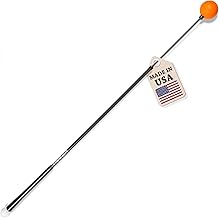
The Orange Whip Swing Trainer is a training aid, not a driver, but it supports drivers intended for slow swing speeds by improving rhythm, flexibility, balance, tempo, and strength. Its patented counterbalanced shaft helps golfers stay on plane, with feedback that supports a smoother, more coordinated swing, which translates to better contact when using a driver.
Best for: Players who want to train their swing mechanics off the course to maximize consistency and timing before making adjustments to the driver itself. This is especially helpful for tempo development and rhythm.
Why chosen: A smoother, more controlled swing makes it easier to harness driver speed on the tee, reducing over-swing and mis-hits that contribute to distance loss.
Caution: It’s a training aid, so benefits accrue when used as part of a structured practice routine rather than as a substitute for proper club fitting or real-course play.
Buying Guide: Key Considerations For Slow Swing Speeds
- Forgiveness and MOI: Seek drivers with high Moment of Inertia to reduce dispersion on off-center hits.
- Launch and Ball Flight: Look for models designed to promote higher launch and mid-to-low spin to maximize carry for slower tempos.
- Weight and Balance: Ultra-lightweights can help speed up the swing, but ensure you still feel control and sound feedback at impact.
- Adjustability: Loft, lie, and face options can help dial in optimal launch; however, minimal adjustments matter for initial fitting.
- Aerodynamics: Sleeker crown shapes and optimized face geometry can help maintain speed through the swing arc.
- Fit and Feel: Try to swing a test model if possible or consult a fitter to ensure the club suits your tempo and release pattern.
FAQ
- What driver features help slow swing speeds? High MOI, larger sweet spots, and designs that promote higher launch while reducing spin are key features to look for.
- Should I choose adjustable loft or fixed? Adjustability helps fine-tune launch after initial fitting; fixed options can still perform well if they match your swing tempo.
- Is a training aid necessary to improve driver distance? Training aids like rhythm-focused devices can help improve tempo and plane, which supports better driver results.
- Can lightweight drivers hurt accuracy? In some cases, very light heads can reduce control; balance and feel matter, so ensure the club suits your swing.
- What’s the best approach to fitting for slow swing speed? Start with a high-MOI, forgiving driver, then adjust loft/lie and face alignment as needed with a fitter.
- Do these drivers require professional fitting? Some benefit greatly from fitting, especially models with adjustable hosels and weight profiles.